
Women and the Workplace
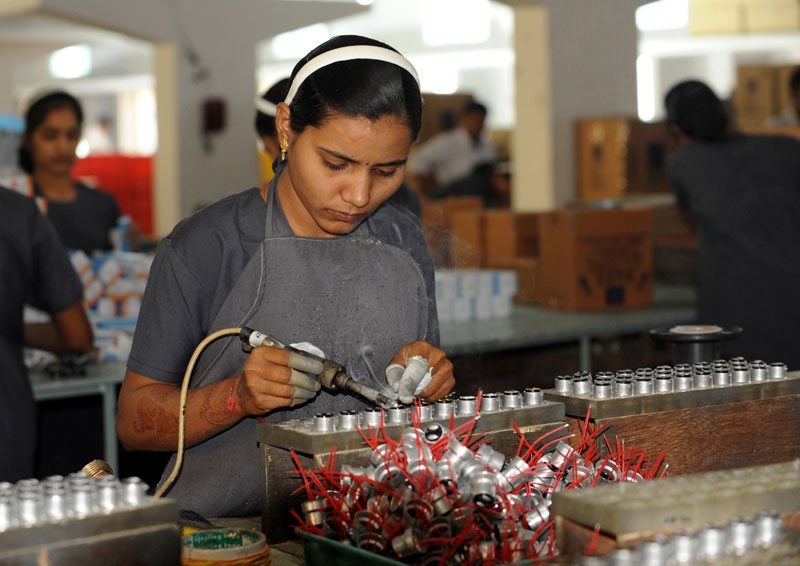
By Sylvia Ann Hewlett and Vishakha N. Desai
Originally published in the Times of India, Sept. 15, 2010
NEW YORK, Sept. 15, 2010 - Even as Western Europe and the US struggle to emerge from the global recession, China and India
are surging ahead. China is projected to become the world's largest
economy within the next decade; India could leapfrog Japan into third
place in individual country GDP rankings as early as 2012. One of the chief engines of these explosive economies: educated women.
Educated women are pouring into the professional workforce in China and
India, with profound implications for national and multinational
corporations. Yet even as employers rely on this growing cadre of
"white-collar" women, many have little understanding of the complicated
career dynamics of this rich tranche of talent. Misconceptions abound, from cultural cartoons to western wannabes.
The ambitions of female talent in the top two emerging markets and the
challenges they encounter are complex, fundamentally different from
their western counterparts and significantly nuanced, according to a
recent study from the New York-based Center for Work-Life Policy
(published in the Harvard Business Review). To begin with, despite many similarities, accomplished women in China and India are not interchangeable.
Chinese and Indian women demonstrate stratospheric levels of aspiration—76 percent and 86 percent respectively aspire to a top job, double
that of their counterparts in the US. But while 85 percent of Indian
women consider themselves "very ambitious," only 65 percent of Chinese
feel the same. This may be partially due to the fact the concept of
female ambition is seen through a negative prism in China.
Furthermore, while women of both nationalities demonstrate impressive
levels of loyalty to their employers, 85 percent of Indian women say
they are willing to "go the extra mile," compared to 76 percent of
Chinese. Lastly, while ambition holds up throughout an Indian woman's
career lifespan, it inexorably sinks in her Chinese counterpart.
Next: "Cultural constraints limit women's mobility and hamstring their career potential."
Childcare issues drag down the career dreams of Indian and Chinese women to a far lesser degree than their Western sisters. Working mothers in China and India are able to think big thanks to a robust matrix of hands-on extended family, inexpensive domestic help, and an increasingly wide range of daycare options.Eldercare, however, has the potential to derail a career. The vast majority 94 per cent of women in India and 95 percent in China are responsible for their parents and in-laws, with more than half contributing up to 20 percent of their salaries. Filial piety is so deeply rooted that "daughterly" guilt often exceeds "maternal" guilt.
"Daughterly guilt" is even more pronounced in China than in India (88 percent versus 70 percent) where women confront the one-two punch of communism's one-child policy and the tradition of a wife caring for her husband's parents. With demographers projecting a leap in the percentage of the population aged over 60 across these regions, this burden is a ticking time bomb.
Extreme jobs are the norm for educated women in both countries, with an average workweek significantly longer than the standard 40 hours. But Chinese women routinely notch up more than 70 hours per week, while Indian women rarely break 60 hours.
Over a third of women encounter bias in the workplace, where entrenched "old boys" networks form nearly insurmountable barriers. However, more Indian women than Chinese 45 per cent compared to 36 percent feel they have been treated unfairly because of their gender, another legacy of communism. For more than half of Indian women, the combination of family "pulls" and workplace "pushes" smothers their initial enthusiasm: 55 percent have considered scaling back their ambition or quitting their jobs altogether, compared with 48 percent of Chinese women.
Cultural constraints limit women's mobility and hamstring their career potential. Because of societal disapproval of women travelling alone, nearly 75 percent in both countries report difficulties Indian and Chinese women often eschew customer/client-facing roles which involve frequent business trips, even though these roles are the fast track to professional success. Furthermore, more than 50 percent of Indian women feel unsafe on their daily commute, causing them to skip the after-hours functions where career-boosting contacts are made.
As highly qualified women in these critical emerging markets struggle to balance the demands of career, children and culture, employers have an unprecedented opportunity to help them fully realise their potential. To do so, companies will have to gain a deeper understanding of the ambitions and needs of their top female talent, and alter their policies accordingly. But the lessons learned in attracting, sustaining and retaining the best and brightest women can only enhance and strengthen an organisation's operations worldwide. Helping these talented women grow is the surest route to continued growth, now and in the future.
Sylvia Ann Hewlett is President of the Center for Work-Life Policy. Vishakha N. Desai is President of the Asia Society.