
The Day Their God Died
Harrowing documentary brings India's child brothels to light
WASHINGTON, DC, February 23, 2011 - A screening here of The Day My God Died, a documentary about Indian child prositution, met with grief and shock as the audience saw the plight of young girls who are coerced into working in brothels in New Delhi.
According to the film, child trafficking is widely regarded by New Delhi's criminal element as "a more lucrative business than the drug trade," raking in about "700 million dollars" a year in New Delhi alone.
The documentary film's protagonists, young girls who were effectively enslaved into the brothels, are all HIV-positive, and were forced to live with their children in unsafe conditions.
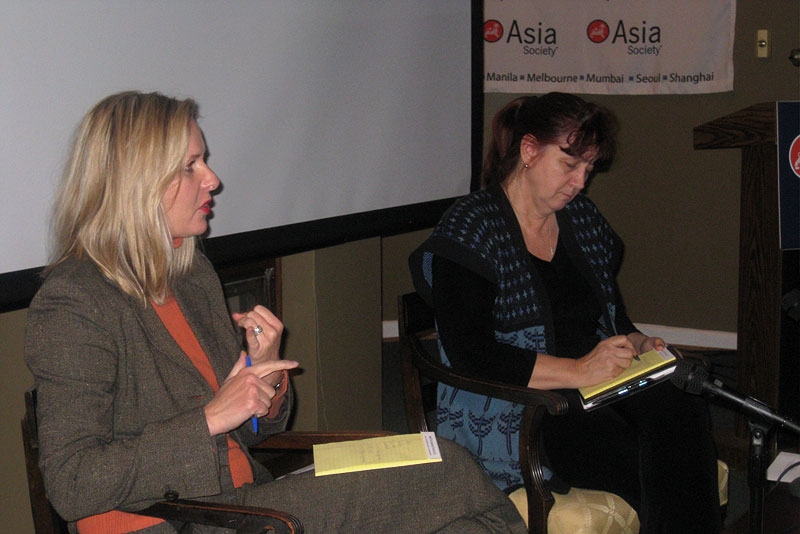
In a panel discussion after the screening, Cindy Dyer, Vice President for Human Rights at Vital Voices Global Partnership, and Laura Lederer, President for Policy and Planning at Global Centurion, gave their perspectives on how to curb child sex trafficking. Lederer emphasized that in order to combat child trafficking, corruption in law enforcement needs to be addressed. She explained that "although there is law enforcement in India, there is a bottleneck for child sex trafficking convicts."
Dyer agreed that while corruption is rampant, there have been some changes to the system. "India has developed a specialized trafficking court in Mumbai because many of the judges would not hear the sex trafficking cases—they would refer them to another court. However, this is slowly changing."
Dyer and Lederer further discussed how working with young men and boys through social marketing campaigns and education could curb the demand for sex trafficking. The point was made that criminalization of men should be made a priority rather than criminalizing the women in brothels.
Dyer concluded by stating, "We have had success in trying to establish that sex trafficking [should go under] the violence against women umbrella, and that it's essential to have Vital Voices bring this to the world's attention."
Reported by James Gale, Asia Society Washington Center