
China’s Environmental Movement: A Journalist’s Perspective
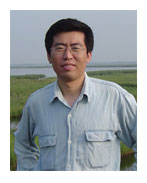
Liu Jianqiang, is a former senior
investigative reporter at Southern
Weekend, China's most influential investigative newspaper, where he
provided front-line and in-depth coverage of China's burgeoning environmental
movement. Some of Liu's most influential articles include his 2004 expose on
the controversial Tiger Leaping Gorge dams in Yunnan province. The story was
personally read by Prime Minister Wen Jiabao, who then ordered the project to
be suspended pending a central government investigation. Liu's 2005 article on
the Summer Palace lake reconstruction resulted in the State Environmental
Protection Administration holding China's first state-level public
environmental hearing.
Liu
Jianqiang was at Asia Society Northern California to participate in a talk entitled
"China's Environmental Movement - A Journalist's Perspective." In this
exclusive interview with Asia Society Northern California's Neha Sakhuja, he discussed his
investigative stories on the ecological impact and displacement of people by
China's hydroelectric projects, special interest groups harming China's
environment and the constant struggle against censorship.
NS:
What are some of the key environmental
problems affecting China today?
LJ: One of the key environmental
problems in China is water. The situation is very serious! The government
officials in China claim that 90 percent of drinking water is not good. The
rivers are also polluted and massive dam construction on a majority of China's
rivers is posing a huge challenge. Displacement of thousands of people is
something very little is being done about. People are losing their homes and
resettlement is not something that is talked about.
Another
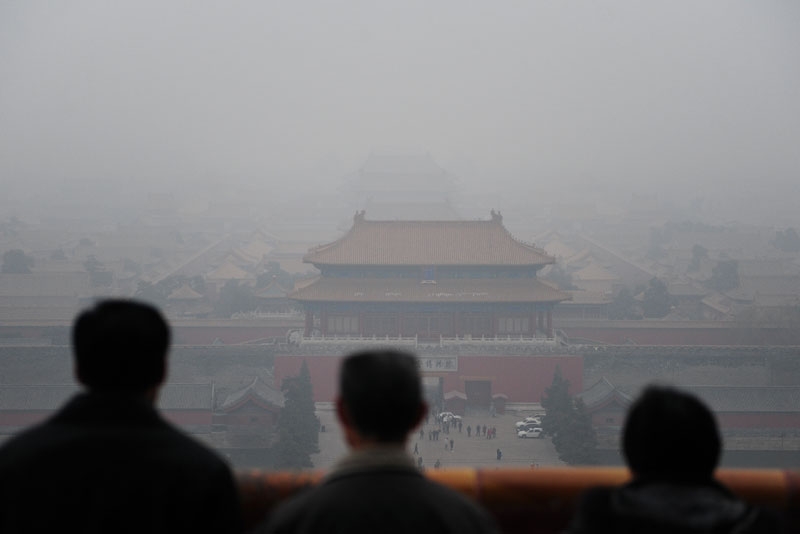
issue is the quality of air in China. Beijing still fares better compared to
other cities in China mainly because it was host to the 2008 Olympic Games, and
yes, a lot of the government officials stay there. However, five years ago
there was this data which said "The average life of a traffic policeman in
Beijing is 48 years because they stand in the street." I think it is a secret
and not many people know about this. The situation is not very good in cities
in Henan province and Shanxi province in middle parts of China where air pollution
caused by cars and factories is
very high.
 Land
pollution is another topic which is recently being reported about. In my
opinion the food is polluted by the soil. I have even reported about the
effects of GM (genetically modified) rice and climate change.
Land
pollution is another topic which is recently being reported about. In my
opinion the food is polluted by the soil. I have even reported about the
effects of GM (genetically modified) rice and climate change.
NS: What are the various impediments to
environmental journalism in China and how has this changed over time?
LJ: The environment in China is not politics; politics is very sensitive. Journalists do find it easier to report about the environment. But my question has always been who is really harming China's environment? It's not you, me or the common people. It's the huge interest groups out there. From local governments to companies and corporations, there are huge stakes in maximizing profit.
When we highlight these stories, journalists are threatened by companies and local governments. This one instance, when a colleague and I were reporting about the Tiger Leaping Gorge dam in Yunnan province - my colleague was detained for four hours and when we did publish the article, the hydropower company called us and told me that the report was false and asked us to issue a public apology.
NS: So do environmental reporters have unique challenges?
LJ: I don't think environment journalists have separate problems. When you have information about a story and a good article, you will face danger.
NS: You have said that "As a journalist, my job should be focused on writing a good report. But half of my effort is spent on considering how to get a story past the censors and the likelihood of punishment." How has this experience been for you? What is the effect of censorship on environmental reporting?
LJ: Yes! I said this because if you want to be a journalist who wants to write what is told to you, your article will be published. If you want to write something meaningful or uncover the damage China's development is causing you have to face censorship.
When I published my Three Gorges Dam article in 2004, I found the Three Gorges Dam Company lied to public for many years. It did not tell the truth about the project or the promised compensation to the displaced residents. They found the article bad for the image of the company and called me warning that "If you publish the article you will be the enemy of the State." I turned off my mobile phone.
When I went ahead with publishing my story on the Tiger Leaping Gorge Dam, my editor warned me about the content of the story. I did sense the pressure he was under to stop me from revealing this information to the public. The final blow was when Wall Street Journal did a story about me and my investigative reporting. I was fired from my job!
That's the censorship. I have to think whether a sentence may be sensitive, and I would probably have to use a soft approach. For me, the main goal is to publish it because maybe it will make a difference. I know I might offend some groups, which is common, but I would have made others happy.
NS: How do people in China respond to your stories?
LJ: When I published the story on the Tiger Leaping Gorge Dams project, it was an illegal project. The day after I published my article, one friend called Premier Wen Jiabao's office asking him to read this story. Later on I was told by an officer at the office that Premier has read the story and has ordered the project to be suspended pending a central government investigation.
The local people who would be affected by the project were not given all details about resettlement. They made hundreds of copies of my articles and sent them to fellow farmers who were not aware and two years later more than 10,000 local people protested against this project. The local officials lied to the people saying no such project was planned. The affected people then showed copies of my article to the local government and said: "Don't lie to us any more. We have the evidence!" I think I can help the people and government by providing them with real information. If the government has real information it does respond.
NS: What is the role of the Internet and new media in empowering social movements in China?
LJ: Internet use has been very empowering for public movements in China. In 2007 in Xiamen, citizens went to the streets to demonstrate against a chemical plant which was being planned by a Taiwanese company and the local government. Even the local media was paid by the local government to refrain from reporting about the issue. People resorted to sending text messages both on the internet and through cell phones. An important fact is that there was no need for leadership. To demonstrate, several thousand people sent messages to each other saying "Let's go for a walk on a certain day at a certain time."
Before new media came into being, this would not be possible. For example, in order to have these public demonstrations or movements, you need a public sphere. Traditional forms included teahouses or salons. But right now, if you look at urban spaces, it's difficult to imagine areas similar to these former social spaces. With text messaging and the internet, there is no need for such formal public spaces and also there is no barrier of class. When everybody in the country knows what's going on in Xiamen, it's very difficult for the government to suppress the movement and delegitimize what had happened.
Nowadays, you might even say that the Internet is very powerful, because people use the web to express themselves about the Tibet issue or point out official corruption.
NS: How do you do this?
LJ: Right now I think the problem China is facing is lack of information about many of the development projects with significant impact on the environment. We call this the "Black Box." The government and big companies continue to construct dams and people are completely helpless. NGOs and journalists are trying to fill in these gaps and pass on the right information.
Well, I can't just publish it in the newspaper and TV. This is where the internet is very useful. China's websites are very unique as they are huge. There are thousands of articles on these websites. Even though the internet is controlled by the government, it is sometimes very difficult to monitor. Lot of people even use chat rooms to get the word out. Interestingly, Chinese language is very easy for the government to censor. There are a lot of internet policemen watching the internet. But most of them are not very good in English, so activists use English to discuss issues.
NS: What have been some of the landmark events and key successes for environmental journalists in China?
LJ: China's worsening environmental crisis is actually creating a growing environmental movement of citizens, NGOs and journalists who are able to write articles, initiate grassroots groups and educate the public about it.
Chinese NGO and the media-sponsored campaign against the Nu River Dams project is the first milestone in China's environmental movement. It was the first big success for China's civil society to postpone a huge environmental unfriendly project.
Media and NGOs' campaign against the Tiger Leaping Gorge Dams Project is another landmark.
When Premier Wen Jiabao ordered further investigation in the Tiger Leaping Gorge Dams in Yunnan Province, the campaign spread its information through newspapers and the internet instead of demonstrations and march protests. Pan Yue, Vice President of China's State Environmental Protection Administration (SEPA) is another individual who has tried to promote democracy in environmental issues. In 2005 I reported about the controversy caused by waterproofing of the local lakebed in Yuanmingyuan Park(Old Summer Palace) in Beijing. On reading the piece, Pan immediately suspended the project following widespread media exposure and decided to hold a public hearing-the first of its kind in China's environmental realm. Unlike previous official hearings, which had been controlled by the host government to prevent inconsistencies in voice, the Yuanmingyuan public hearing allowed for representation from different stakeholders and engaged the public in government decisions.
I have also reported about the project on GM rice which was being promoted by some scientists who were seeking personal benefits from this project. The investigative piece on this led to suspension of this project.
NS: Is there a thin line between journalism and activism in China today?
LJ: In China some pioneer NGOs are headed by former journalists. They know the truth and wanted to do something about it. Their influence in the media makes it easier to get their stories out to the people. Most of the NGOs are headed by scientists who don't have background in journalism and have their own agenda.
Covering environmental issues over the years, I have seen myself conflicted over my role as a journalist or an activist. It's very difficult. I was a journalist, but now I spend more and more time on the environmental protection activities. When I sit to write an article I am a journalist. When I go to the river, the dam, I have to do something about it. Not just write, but talk to people, organize meetings. May be there is a line, but it's very thin.
NS: What are your future projects?
LJ: I just published a book about Tibet (The Tibetan Beads- Legend of Tibetans) in 2009. I will continue to write books and stories on environment, culture and the reality of Tibet, and will write a book on China's environmental movement. Meanwhile, I am going to join the campaign for China's environment protection.
Liu Jianqiang is a research associate at the Peking University Center for Nature and Society and Visiting Scholar at UC Berkeley. He also serves as columnist and associate editor for www.chinadialogue.net. He is the author of The Tibetan Beads-The Legend of Tibetans, and an upcoming book about rafting on the Jinsha River near the Tiger Leaping Gorge, to be published in 2010.