Worldwide Locations
Worldwide Locations
Worldwide Locations
Worldwide Locations
An ancient civilization and the world’s largest democracy, India’s culture and traditions were formed by Hindu kingdoms, the growth of indigenous religions (including Buddhism and Sikhism), Muslim invasions, Mughal rule, and nearly two hundred years of British colonization.
India gained independence from Britain on August 15, 1947, after the British partitioned the state into west and east, creating the modern state of Pakistan. India and Pakistan have fought four wars: three over the disputed territory of Kashmir and a third in 1971, which led to the creation of Bangladesh (formerly known as East Pakistan).
The controversy over Kashmir remains unresolved, and while attempts have been made to bring peace between the two neighboring countries, the process is hampered by other regional realities, including the growth of Islamic fundamentalist forces in Pakistan and the neighboring Afghanistan. India has blamed Pakistan for training insurgents and terrorists who attacked the Indian Parliament in 2001 and bombed commuter trains in Mumbai in 2006. In November, 2008, scores of people died after terrorists opened fire and bombed civilians in two popular hotels in Mumbai. The attacks were allegedly carried out by Pakistani insurgents.
For decades after gaining independence, India followed the socialist model of building public infrastructure and government enterprises, along with a private sector. In the late 1980s, due to the economic realities of the time, India started a process of economic liberalization. This has resulted in a substantial economic boom in India, which now sports foreign investments, high GDP growth rate and local business investment in the West. India is also a nuclear power.
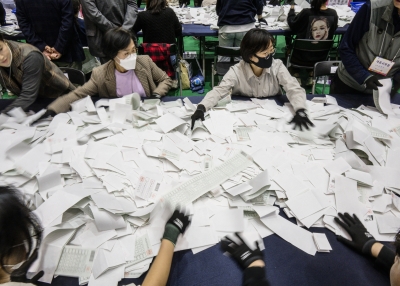
In May 2009, about 714 million registered voters went to the polls to select India's new parliament. A month later, the winners were sworn in, including the latest Prime Minister, Manmohan Singh of the Congress party.
India’s vast hinterlands are still affected by poverty and caste differences, and Hindu-Muslim communal violence occasionally erupts in major Indian cities. India also suffers from other problems, including pollution, corruption and the consequences of overpopulation. India also falls on the Tier 2 Watch List for a fifth consecutive year for its failure to provide evidence of increasing efforts to combat human trafficking in 2007.
Last updated: July 7, 2010
Sources: BBC, UN Data, World Bank, International Crisis Group, CIA World Factbook.