
Timeline of North Korea's Nuclear Ambitions
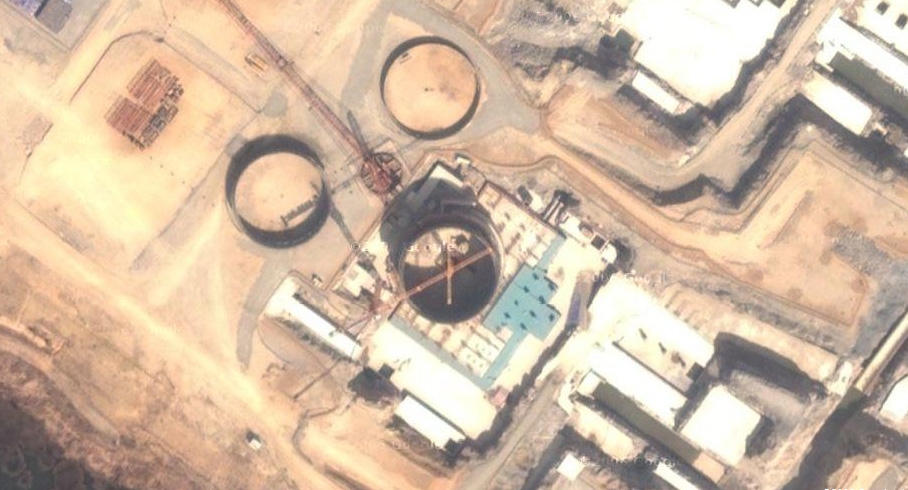
On September 19, 2005, North Korea signed a widely heralded denuclearization agreement with the United States, China, Russia, Japan and South Korea. In the intense six-party talks Pyongyang pledged to "abandon all nuclear weapons and existing nuclear programs," and Washington agreed that the United States and North Korea would "respect each other's sovereignty, exist peacefully together and take steps to normalize their relations."
Next day, North Korea said it will not scrap its activities unless it gets a civilian nuclear reactor. Four days later, the U.S. Treasury Department imposed sweeping financial sanctions against North Korea, branding it a "criminal state" guilty of counterfeiting, money laundering and trafficking in weapons of mass destruction.
The sanctions were very severe. The United States asked all banks in the world not to deal with North Korea nor handle any transactions involving the country.
The Bush administration says that this sequence of events was a coincidence. But North Korean leaders view the financial sanctions as a calculated effort to undercut the September 19 accord, squeeze the Kim Jong Il regime and eventually force its collapse. In North Korean eyes, pressure must be responded with pressure to maintain national honor and to jump-start new bilateral negotiations with Washington that could ease the financial squeeze.
July 2006 North Korea test-fired seven missiles; the UN Security Council voted to impose sanctions over the tests. Some shorter-range missiles will certainly be a threat to Japan and South Korea. One missile, the Taepodong-2, is designed to be able to hit the west coast of the United States. It exploded less than a minute into flight. While some have laughed at the missile’s early failure, others warn that North Korea will learn a lot from the test and will use the new knowledge to construct a more successful missile.
On October 9, 2006, North Korea's Korean Central News Agency announced that it had successfully conducted an underground nuclear test. The test was reported to have taken place at 10:36AM, local time in North Hamkyung province. According to the KCNA statement, no radioactive leakage had taken place as a consequence of the test. The test was reported to have had a yield equivalent to 550 tons of TNT.
It took place in spite of a UN Security Council presidential statement on October 6, 2006 warning North Korea that "a nuclear test, if carried out by the DPRK, would represent a clear threat to international peace and security."
According to press reports, China was given 20 minutes prior notice of the nuclear test by North Korea , and then immediately proceeded to alert the United States, South Korea and Japan.
The United States, France, Britain and Japan want the resolution under Chapter 7 of the U.N. Charter, which deals with threats to international peace, breaches of the peace and acts of aggression. It allows the council to authorize measures ranging from breaking diplomatic ties and imposing economic and military sanctions to taking military action to restore peace.
China said North Korea "defied the universal opposition of international society and flagrantly conducted the nuclear test" and urged that it return to six-party nuclear disarmament talks.
Russian President Vladimir Putin told his Cabinet that Moscow "certainly condemns the test conducted by North Korea."
British Prime Minister Tony Blair said the test was a "completely irresponsible act."
Iran, which also faces Security Council action over its disputed nuclear program, expressed understanding for North Korea's action. Iranian state radio blamed the reported nuclear test on U.S. pressure, saying the test "was a reaction to America's threats and humiliation."
North Korea all the while remained defiant. Pak Gil Yon, North Korea's U.N. ambassador, said the Security Council should congratulate the Democratic People's Republic of Korea instead of passing "useless" resolutions or statements.
The September 19, 2005 agreement was bitterly controversial within the U.S. administration. The chief U.S. negotiator, Christopher Hill, faced strong opposition from key members of his own delegation. It was particularly galling to Victor Cha, director for Asian Affairs in the National Security Council and to Richard Lawless, assistant secretary of Defense, that Hill agreed to conduct intensive bilateral negotiations with North Korea in Beijing prior to the six-party talks: bilateral talks amount to implicit diplomatic recognition, and the "steps to normalize relations" would legitimize a rogue regime, according to the two officials.
During six hours of intensive give-and-take, North Korean negotiator Kim Gye Gwan, said over and over, "How can you expect us to return to negotiations when it's clear your administration is paralyzed by divisions between those who hate us and those who want to negotiate seriously? At the very time when we were engaged in such a long dialogue last year, your side was planning for sanctions…We have concluded that your administration is dysfunctional."
The world's reaction to North Korea's nuclear ambitions is divided between those who think nuclear capabilites will bring better livelihood and stability to the region and those who are pushing for economic reforms and a denuclearization in an effort to stop a terrorism campaign, or worse.
Copyright 2006. Author: Janie Dam.