Defining Contemporary Asian Art
MUMBAI, July 22, 2009 - Only in the late 20th century has the concept of a contemporary Asian art culture emerged in the West. Today, contemporary Asian artists struggle to maintain a balance between expressing the particularity of their cultures on the one hand, and participating in a world of contemporary art which is becoming increasingly global on the other. As spectators, how can we define contemporary Asian Art? How do we separate contemporary Asian Art from contemporary Art as a whole? What makes it Asian and what makes it contemporary?
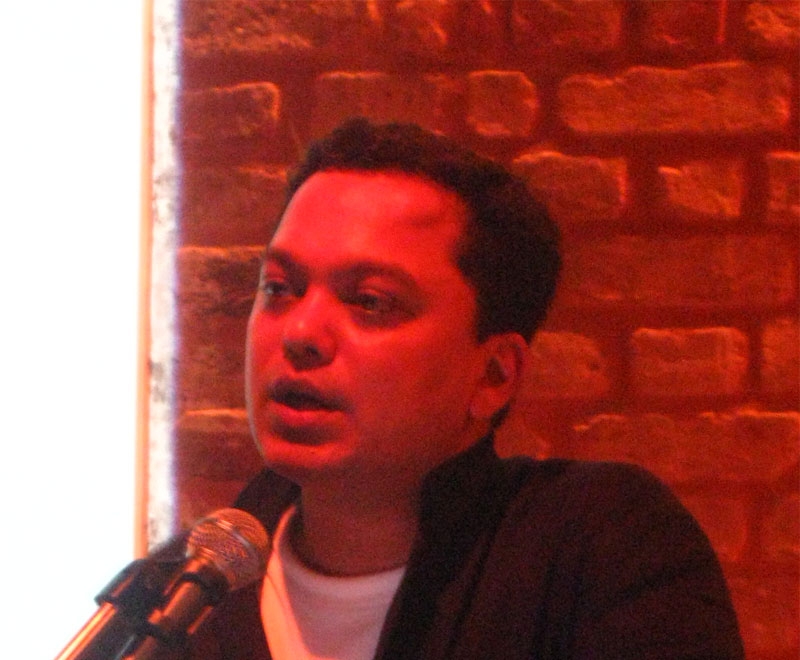
In a lecture co-organized by Asia Society India Centre, Chemould Gallery, and Jnanapravaha, Chaitanya Sambrani, Professor of Art History at the Australian National University of Canberra, discussed the subject of defining contemporary Asian art. Sambrani offered three criteria which might help us understand what is integral to contemporary Asian art and what defines it. First, the work must display its context in some way; it must speak about a place, a people, or a culture. Second, the work must be legible for an international audience within the rubric of post-conceptualist contemporary art. And finally, the work must have enough local meaning and significance to maintain the particularlity of Asian contemporary art.
Ultimately, when discussing the meaning of contemporary Asian art, we confront the question: Why do we even need the unifying category of Asia in the first place? In the face of a so-called modern knowledge producing apparatus, composed of primarily Western European and North American museums, universities, and institutions, a united Asian art movement can function to re-examine and redefine the predominant images of modernity. In this sense, there is a great deal of need to celebrate the recognition of a unified Asian contemporary art movement. Through this recognition, Asian nations can also gain greater insight into and understanding of each others' cultures, not mediated through the lense of the Western world, but in direct communication with one another.
Reported by Madeline Gressel, Asia Society India Centre