The World of Buddhism

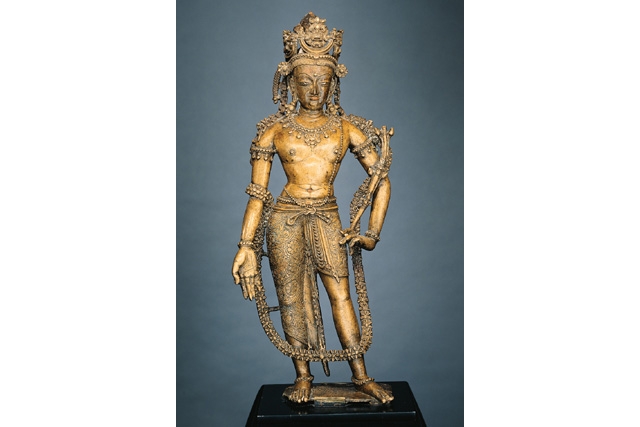
Bodhisattva. Western Tibet, late 10th – early 11th century: brass with inlays of copper and silver, 27 1/4" (69.2 cm), 1979.45

Bodhisattva. Western Tibet, late 10th – early 11th century: brass with inlays of copper and silver, 27 1/4" (69.2 cm), 1979.45

March 11 - August 24, 2003

The ancient trade routes running through Asia were the main arteries of communication and transport for international travelers. Along these routes, Buddhism and Buddhist artistic influences from various areas of India, the homeland of Buddhism, spread to the Himalayas, Southeast Asia, and East Asia at different times and in varying degrees of intensity. Each wave of influence had its own specific elements that underwent a process of adaptation, adjustment, and reinterpretation by the genius of a particular area, resulting in images with pronounced ethnic and stylistic variations. Yet the commonalities among the works of Buddhist art in the Asia Society's collection, particularly their shared recognizable features and visible expressions of spiritual accomplishment, highlight the unifying role played by this Indian religion.


Post new comment

Your comments are welcome, please adhere to our guidelines

Be respectful. Personal attacks will not be tolerated; nor will profane, abusive or threatening posts.

Keep it short (150 words or less), Stay on topic.

Asia Society reserves the right to moderate all comments and remove or edit for guideline violations. Thank you.

The content of this field is kept private and will not be shown publicly.
Type the characters you see in this picture. (verify using audio)
Type the characters you see in the picture above; if you can't read them, submit the form and a new image will be generated. Not case sensitive.