Chinese Language
Myths and Facts
Few things in Chinese culture are more widely misunderstood outside of China than the Chinese language. The Chinese write very differently from us and indeed from all other literate societies in today's world except for Japan and Korea (which continue to make partial use of writing borrowed from China long ago). Even to the untutored eye, Chinese characters are not an alphabet, though many Americans who want to ask about them do not know what term to use for them, and questions are often asked such as, "Is it true that the Chinese alphabet … well, writing … I mean pictures, well … you know what I mean … they're very pictorial, aren't they?"
Because of the obvious radical difference between the way that the Chinese write and the way that we write, many myths have grown up, not just around China's writing system, but around its language as a whole and around China's people. Indeed, people often say that the Chinese write in pictures. Many believe that Chinese is a monosyllabic language, which presumably means that every word in Chinese consists of a single syllable, like the English words but, aim, quick, work, crime, laugh, and unlike the words although, objective, rapid, employment, transgression, guffaw. Many believe that, because they write similarly (in part), Japanese, Korean, and Chinese people are related. Many assume that because of their language, the Chinese think in a way that is radically different from our way of thinking. Regarding modern Chinese, a common myth holds that the Communist government has done away with Chinese characters and has substituted a brand new alphabet that all people now use instead of characters. It is further believed that this supposed change has been tantamount to abandonment of the Chinese language itself. In addition, some believe that the Communist government has wiped out the various Chinese dialects.
Each of these beliefs and assumptions is false. Each of them is in its own way outrageous, since taken together they suggest that the capacity for language among the world's largest national-ethnic group is somehow different from that of all other human groups, a suggestion for which there is no evidence. To examine these unhelpful myths thoroughly would require greater scope than this short essay will permit. But in the following pages, I shall outline some basic facts about the Chinese language. In doing this, I shall try to correct the myths that I have just listed.
Chinese belongs to the Sino-Tibetan language group. Sino-Tibetan is a major genetic grouping of languages like the Indo-European family to which English belongs (along with German, French, Hindu, etc.). The Sino-Tibetan speech community stretches from northeastern India to northeastern China, and its billion-plus speakers are found in Southeast Asia, South Asia, and East Asia. Chinese itself is not a single language, but a language family like the Romance language family to which French, Spanish, Italian, Romanian, and Swiss Romansch belong. Like the Romance languages, the Chinese languages are mutually unintelligible (that is what makes them different languages). But, because they share a common history and a good deal of common vocabulary and grammar, it is much easier for a speaker of one Chinese language to learn another Chinese language than for a complete outsider to do so. Again, this is true of the Romance languages as well. The Chinese languages referred to here are the famous Chinese "dialects": Cantonese, Shanghai, Fukienese, etc. Because speakers of one of these "dialects" cannot understand speakers of another of them, the "dialects" are as much real languages as are the Romance languages.
There are two ways, however, in which the analogy to the Romance languages is inaccurate. Most of the Romance languages are identified with separate independent countries and bear a name related to their place of "origin." There is no such political identification of nation with language in China. Politically and ethnically, China has retained the ideal of unity for well over two millennia. Although at times China has been divided by conquest and civil war, the divisions have never identified parts of China as separate nations, and the language groups of China have never been a rallying point for political or military separatism.
The other important difference between the Romance languages and Chinese lies in China's writing system. After the spread of Roman civilization during the expansionist years of the Roman Empire, Romance dialects grew to a position very much like that of the Chinese "dialects." Each region of the Roman world had a language that was Romance in origin and in vocabulary and grammar, but that had become incomprehensible to speakers of other Romance "dialects" through linguistic change and influence from the languages of the peoples who preceded the Romans in that area. Yet, although the languages of the various areas were so different, the written language was relatively uniform. That written language was, of course, Latin, the standard language of Rome. Latin retained its standard form for a very long time because of the prestige of Rome first as a political and then as a religious capital, and because of the low rate of literacy prevalent in pretechnical societies. Once Rome's power began to decline and the independence of the outlying areas increased, people more and more wrote as they spoke, using the symbols of the Roman alphabet to reflect their own pronunciations and way of forming words instead of those proper to Latin. Reflecting speech is a natural thing for an alphabet to do, since alphabets are a phonetic way of writing. Because Chinese is not alphabetic, its writing does not reflect differences and changes in speech. Even though two speakers of different Chinese languages cannot understand each other (and thus may have to resort to a foreign language such as English for oral communication), they can write to each other and thereby understand each other. The ways that they read aloud what they have written will differ almost completely, but the meaning of what has been written will be identically clear to each. Written Chinese reflects the vocabulary and grammar of the most broadly used Chinese oral language. Speakers of the nonstandard Chinese languages learn this vocabulary and grammar, often pronouncing the words in their own local ways, when they learn to read and write. In short, the written language of China is uniform despite China's actual language diversity and the mutual unintelligibility of the several Chinese languages.
The earliest origin of this writing system was in fact pictorial. Early characters dating from perhaps three thousand years ago illustrate how Chinese writing began.
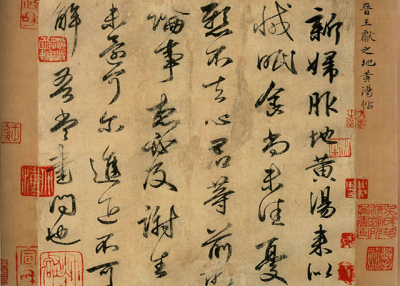
But this early start with pictorial writing was quickly abandoned. It is difficult for pictures to represent abstract thoughts, and different people's drawings of the same object may differ greatly. It is simply cumbersome to express lengthy messages by pictures. As writing became more common and as the nature of written material became more diverse, Chinese writing grew more and more stylized and less pictorial. In the third century, B.C.E., Chinese writing was officially standardized to a form that is not too distant from today's Chinese writing. Since that time, the pictorial origins of Chinese writing have been largely obscured by the uniformity imposed on the writing to make it more efficient.
The pictures are evident only to those who have been informed that pictures are present. Much more important than graphic representation in written symbols has been the combination of an element in a character that suggests the pronunciation at the time of the character's creation and the one that indicates something about the semantic category of the meaning (i.e., human, mechanical liquid, insect, etc.).
Chinese characters in their modern form remain the only regular medium for writing standard Chinese in the world today. In modern China, some of the most complex or frequently used characters have been simplified by reducing their number of "strokes" or lines, in order to make them easier to learn to read and write. Furthermore, some of the least frequently used characters have been merged into a single character. This simplification of the writing in China has been accompanied by a massive effort at literacy training and an intensive campaign to promote Mandarin, the standard dialect, as the national language. The results of these campaigns have been outstanding. China's literacy rate has risen from between twenty and thirty percent to between eighty and ninety percent, a remarkable achievement for the nation with one of the most difficult writing systems to learn. Along with the spread of literacy in China has been the extension of the use of Mandarin as the national spoken language, and the adoption of a standard spelling system called Pinyin, which uses the Roman alphabet to spell the pronunciation of Chinese characters. Pinyin, officially replacing a variety of older, unstandardized romanization systems, is used as a reference tool in dictionaries, as a supplement to characters on signs and titles, and as the means of introducing standard pronunciation of characters to primary school first graders. In 1979, China's news agency began using the Pinyin spellings of names and places in dispatches, and Americans had to get used to Mao Zedong and Zhou Enlai instead of the more familiar Mao Tse-tung and Chou Enlai. Some American newspapers mistakenly reported this adoption of the Pinyin system as a decision to abandon characters for the alphabet. Although there are some in China who advocate such a move, and although such a change is contemplated by planners of very long-term policy, there is no likelihood of it occurring soon.
China has thus not followed the lead of Japan in reorganizing its writing system. Japanese writing incorporates both Chinese characters and symbols that have a sound value like an alphabet (called a syllabary). Because of their syllabary, the Japanese are able to learn much more quickly than the Chinese to write their language intelligibly, even if not elegantly. (Elegance and style require the use of characters in Japanese.) Japanese differs from Chinese not only in its writing, but in almost all other aspects as well. Along with Korean, Japanese is related to the Altaic language family, which includes Turkish, but not Chinese. In Japanese there is a highly elaborated system of hierarchical expression for speaking with persons of different social levels, something Chinese does not have. In Japanese, verbs come at the end of a sentence; in Chinese they come in the middle. In Japanese, the characters may be read with words of several syllables. In Chinese every character is read with a single syllable. To sum up, although the two languages both employ written characters, their differences outweigh their similarities, and Americans should not assume that the two languages have much in common.
Each Chinese character is pronounced as a single syllable. This is the source of the myth that Chinese is monosyllabic. The truth is that most Chinese words are polysyllabic and are written in clusters of characters. Most words in modern Chinese are two syllables (two characters). Thus, ming means "clear, bright" and bai means "white, blank". Put together, mingbai means "understand, clear," and onlymingbai can be used to mean "understand." Ming can never be used alone, and bai means something different when it is used alone.
The most troublesome myth to deal with is the one that maintains that, because their language is structured differently from ours, the Chinese necessarily think differently from Westerners. One of the silliest versions of this myth that I have heard is the claim that science cannot be practiced in Chinese because that language is not "scientific." (Since all languages are about equal in their inconsistencies and irregularities, it is difficult to know what the word "scientific" means when applied to a language.)
The idea that Chinese and Westerners think differently because of linguistic differences is, in my opinion, unconvincing. Indeed I find very little hard evidence to prove that language and thought are intertwined in any culture. Certainly, our individual thoughts and the specific language in which we express them are inseparable. But that does not mean that what we say in our own language may not have direct equivalents in another language if what we say happens to be spoken by someone with our same aims.
Some implausible assertions about the way the Chinese language makes the Chinese people think include: the Chinese do not distinguish between one and many because their words are not marked for singular and plural; the Chinese do not know the difference between definite and indefinite because their language lacks articles; the Chinese do not always understand the differences between past, present, and future because their verbs are marked for change and completion rather than directly for time reference; the Chinese do not clearly understand the difference between counterfactual statements and possible ones (e.g., "If I were you, I would …" vs. "If I go, I will …" because their language does not have any formal ways to distinguish the two. If any of these assertions were true, it is unlikely that the Chinese race would have survived three or four millennia, since they would be always in the wrong place with the wrong objects and quite uncertain about whether they were there or not.
Most such misunderstandings come naturally from an inadequate understanding on the part of non-Chinese who are attempting to analyze Chinese. Some of it also comes from Chinese speakers who inadequately comprehend Western languages.
There is, however, one relationship between thought and language which is not myth. That relationship is exemplified in Chinese by the tendency of ordinary Chinese to understate, or to convey meaning indirectly. Not only do the Chinese not share our predilection for expletives of a superlative intent such as "Terrific!" "Great!" "Fantastic!" and the like, but they frequently describe situations through understatement, double negatives, apparent vagueness, euphemism, and allusive language. In negotiation, an agreement to a proposal may be given as wenti buda, which literally means "The problems are not great." This tendency is related to formulaic expressions in Chinese such as bucuo "no error" = "right you are," bushao "not few" = a lot," chabuduo "off not much" = "approximately." Similarly, a denial may take the form of "Perhaps it's not convenient" or "Possibly the time isn't right" for a refusal to respond to a proposal that is seen as impossible to implement. Criticism is often given indirectly, but effectively. Frequently historical allusion is used to describe a situation that the critic does not like, and the reader or hearer is left to infer who in contemporary life is being castigated. The former head of state, Liu Shaoqi, was labeled as "China's Khruschev" in the months before he was publicly identified and brought down. The late premier, Zhou Enlai, was identified with Confucius in the Anti-Confucius/Anti-Lin movement of the early seventies. Naturally, political labels and symbols form a major part of the vocabulary of both criticism and approbation, though it seems that the vocabulary for identifying deviants (right winger, right deviationist, capitalist roader, ultra-leftist, those who use the red flag to oppose the red flag, etc.) is much greater than that for identifying model citizens (as is equally true of the language use of the Christian Church).
It is important to realize that these usages are not new in Chinese society; only the specific terms, such as those with Marxist-Leninist content, are new. The tendencies to indirectness and allusion are ancient cultural traits of Chinese society, and politicians and negotiators were using them as much hundreds of years ago as they are now. This use of language is an expression of a cultural preference for harmonious and positive intercourse among people. It is a cultural expression, not a control of thought by language. Language is simply one of the tools through which a society expresses its character, and it is to be expected, not wondered at, that Chinese society expresses the same characteristics through its language as it does in other cultural forms.
Because the focus of American relations with China has moved from diplomatic sorting out to business connections, there is one area of cultural expression in language that must be mentioned in closing. That concerns the use of a special language for legal purposes. In our society, legal language is so specialized that it alone often carries the difference between one party's satisfaction and the other's in a hotly contested dispute. Our legal profession is a huge body of technocrats trained principally in the wielding of the tool of legal language. It is often noted that China has a tiny number of lawyers (as does Japan) compared to the United States. This is not primarily because Chinese criminal proceedings have failed to allow sufficient protection for defendants (though that has often been true), but because binding relations involving the exchange of money, goods, and services are not sealed in immutable language in China. Rather, contracts lay out basic wishes of both sides and fundamental intents; from our point of view, at least, a great deal is left to the common sense and mutual trust of the parties concerned. That procedure is unobjectionable so long as the expectations and assumptions of the two sides are the same. But troubles may arise when one party's differ from those of the other. Different expectations, of course, are more likely to occur when the parties are from different cultures and where the principal participants do not know each other's languages well.
China's joint-venture law of 1979 is a case in point. That law simply states general principles and does not contain the level of detail that American and other Western business people would consider normal in their own societies. Because of the vagueness of the language used, many businesses hoping for deals in China have held back from entering joint ventures for fear of losing their investment should something not planned for occur.
Misunderstandings related to language—particularly those that lead to troublesome problems—come from cultural misperceptions and language incompetence, not from the different structures of the two languages that two peoples speak. So long as we in America remember that Chinese is one of the world's human languages and make intelligent provisions for the training of enough Americans in the use of that language, we face little problem from the uniqueness of the way that the Chinese speak and write. But if we continue our historical ignorance of both China's culture and language, we doom ourselves to a very conflicting relationship.
Author: Timothy Light.