
Service Learning
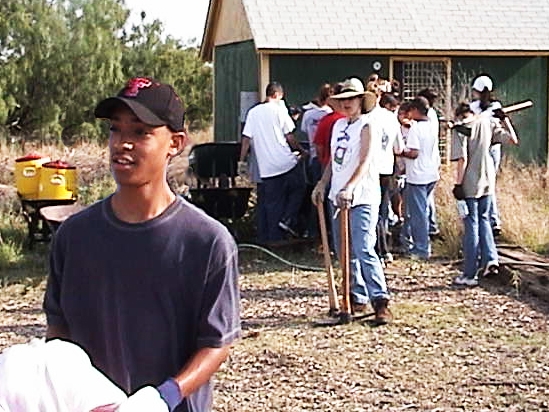
Service learning goes beyond volunteering or fundraising. It has explicit learning objectives and involves real-world skills and critical analysis. As service learning has taken root in schools and afterschool programs, its primary focus has been local and national.
However, examining global issues can motivate a greater understanding of and involvement in local issues, and vice versa. If you already have a service component to your program, look for the global implications of the issues you already address. Or, help youth identify causes that are inherently global, such as protecting the environment, rebuilding after natural disasters, assisting those in poverty, or expanding educational opportunity, and create local projects that take into account broad perspectives and implications.
Global learning programs can help youth connect local issues that concern them with the people, communities, and countries facing the same issues. Give participants the chance to consider how they want to make a difference in the world, and provide background knowledge on issues that are appropriate in order to ground the learning and help them make informed choices.
It is also important to provide structure, focus, and clear learning objectives for knowledge acquisition as young people embark on international service projects. Remind students always to respect the people and causes you are taking on. Youth should see themselves not as heroes who set out to rescue a victim, but as citizens who share an equal part in the challenges and responsibilities of a global age.
Steps to get started
Organize committees and groups to work on project planning, and create an oversight structure that considers which decisions youth can make and which adults must make. Use the Guidelines document linked above as a planning tool.
Identify the kinds of skills that will make young people effective agents of change. As participants help to structure service learning projects, encourage them to consider the full scope of their involvement by asking the following questions:
- Relevance: Does the project identify an issue that is important both locally and globally? Does the project idea inspire others?
- Research: Have participants used a variety of international sources to learn about this issue? Are their assumptions, ideas, and conclusions based on a solid knowledge base? Have they conducted their own research, such as polling or interviews, on how this issue impacts their community?
- Point of View: Does the project consider the issue from multiple perspectives?
- Analysis: Does the project thoroughly examine the issue and present informed conclusions on how to take action?
- Implementation and Impact: Is the project collaborative, creative, and effective? Do participants demonstrate leadership abilities?
Consider discussing these elements with the students and get their input from the conceptual stage through completion. Some schools draw up a student agreement based on these conversations to make—for all involved parties—expectations are very clear.
Many schools that are serious about global learning have made service learning a graduation requirement.
Follow-up and Reflection
Reflection is a critical piece of any service learning initiative—both during the project and afterwards. It also gives students the opportunity to practice their research, writing, presentation, and technology skills. Other students in the school, in turn, will be able to learn more about global challenges. Consider some of these activities for students:
- Oral presentations: This could include one-on-one student presentations with the teacher or project leader; a whole-class or group discussion; or an oral report to the class and community partner, ideally with PowerPoint or other multimedia assets. Students can also research the issues and local experts, then organize and moderate an evening panel discussion with invited guests and a public audience.
- Multimedia projects: Create a photo, slide or video essay; post images to an Intranet or Internet site; create drawings, collages, or other artwork of the project; or stage dance, music, or theater presentations. Curate a photography exhibition using photographs from around the world, with appropriate captions, and give docent presentations to family and community members.
- Writing: Record the experience through essays or research papers; write in journals, whether shared or maintained privately; create a case study or history of the project or of an individual outside the school who participated; develop a guide for future participants; or write a news release and try to place it with a local newspaper.
Attached above are a student reflection sheet and a program evaluation tool.
Service Learning in Action
One example of service learning is the Building with Books program at Marble High School for International Studies in the Bronx, New York. This elective course encourages students to investigate contemporary issues, such as sustainability, health, human migration, and the environment, from multiple perspectives, while fulfilling core global history and geography curriculum requirements. Students raise money by participating in related service-learning projects. The money raised—and the new knowledge and experiences—are put towards a culminating trip to a developing country where they help build a school.
At Crooked Creek Elementary in Indiana, each grade level selects a country to study throughout the school year, and then designs an international product, creating a class business through which it advertises and sells the product. The annual Global Marketplace is the culminating event for the yearlong study. Parents, community members, students, and staff are invited to participate. Students donate their profits to global philanthropic causes, for example: the AIDS relief project in Eldoret, Kenya; the Inuit schools in Canada; Food for the Poor in Haiti; and an initiative to purchase bicycles for students in remote Mexican villages so they can attend school.
Resources to Help You Get Started
See Barbara Lewis' book, The Teen Guide to Global Action: How to Connect with Others (Near & Far) to Create Social Change. (Minneapolis: Free Spirit Publishing, 2008.)
These organizations offer assistance on issues ranging from effective practices to project ideas to curriculum resources to teacher training and professional development:
Generator School Network
The Generator School Network is an online community of more than 5,000 youth and adult members who have discovered how they can change the world through service-learning. The GSN is a resource for sharing, service-learning professional development, and networking.
Corporation for National and Community Service
The Corporation for National and Community Service was created by Congress in 1993 to expand opportunities for service for people of all ages and backgrounds through Senior Corps, AmeriCorps, and Learn and Serve America. The website provides general resources on service-learning programs as well as specific information on grants.
Find Inspiration!
The organizations listed above are good sources for project ideas and can offer suggestions for ways to form partnerships with the local community. In addition, the following organizations all offer internationally oriented service opportunities or serve as information clearinghouses for other organizations that do implement such programs.
Author: Heather Singmaster. Deborah Agrin contributed to this story.
Discussion Questions
What has been your school's experience in service learning? Were there local-global connections? Please share!