Population Change and Development in Korea
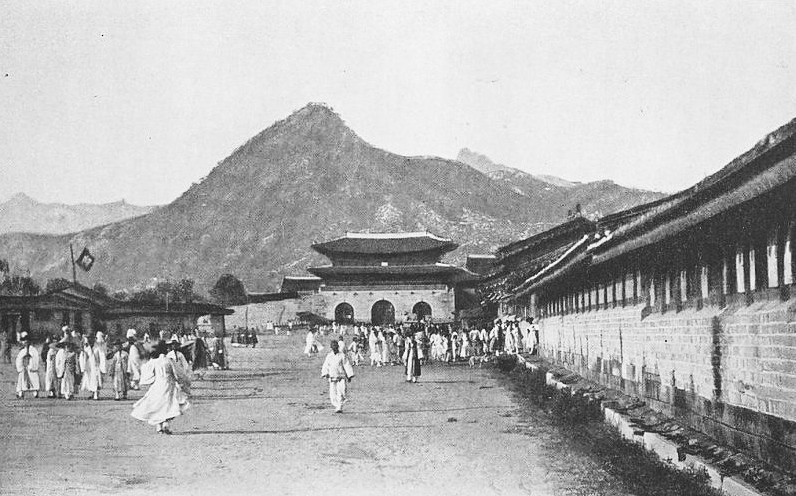
Learn about how Korea transformed itself from one of the poorest countries in the early 20th century to an economic giant in the early 21st century.
Background
Korean society has undergone a major transformation since 1960. An economic miracle, demographic transition, urbanization, changes in family life, and the formation of civil society constitute the major features of the transformation. The collapse of the Syngman Rhee regime attributable to student power in 1960 and the institution of a military regime headed by Park Jung-hee one year later signaled the beginning of the whole process. The military government initiated a strong drive for economic growth and population control in 1962, and its efforts were rewarded.
Before its economy rose out of its traditional stagnation, Korea was one of the poorest countries in the world, with few natural resources and rapidly growing population pressures. In 1960, the per capita GNP was about 80 US dollars, and 25 million people resided on the approximately 100,000 square kilometers (62,000 square miles) of land. In addition, the country had been divided into two political entities after its liberation in 1945 from the 35-year colonial rule of Japan, and a civil war during 1950-53 (the Korean War) reconfirmed the division.
Traditionally, most Koreans had engaged in agriculture. But the exploitative agricultural policy of the colonial regime resulted in the exodus of poor tenants and farm laborers to Japan, Manchuria, and cities on the Korean peninsula throughout the colonial period. The urban population increased from 2.8% of the total population in 1915 to 13.2% in 1944. It was estimated that there were about four million Koreans overseas—representing 13% of all Koreans worldwide at the end of the colonial rule. In sum, Korea experienced the largest diaspora of any country in the first half of the twentieth century.
Following the 1950-53 war, Korean emigrants in Japan and Manchuria were repatriated on a massive scale, and about 80% of them settled in South Korea. Adding to this, a population movement developed from North to South Korea immediately following the liberation and continued through the civil war. The total number of returnees and refugees that entered South Korea was estimated at more than 3 million, about 15% of the total South Korean population. The destitute migrants headed for cities, and the cities experienced population explosions. Another result of the war was a baby boom that brought about an annual rate of natural population growth of 3%, the highest in the history of Korea. The baby boom added difficulties to an already desperate economy. At this moment of crisis, the country started on its path toward development and modernization.
Demographic Transition
Korea’s demographic transition started in the early 20th century with the introduction of Western medical and health systems. Mortality rates declined, and the life expectancy of Koreans increased from 37 years, during 1925-30, to 52 years during 1955-60. Increasing population growth rates exacerbated pressures on land resources. The process of population stabilization began in the early 1960s. Responding to the high population pressure coupled with extreme poverty, the government became more involved in family planning. Fertility began to decline rapidly in the mid 1960s and reached the bare population replacement level in the mid 1980s. Fertility transition had progressed at a tempo unprecedented in any demographic history, taking only 20 years to complete. Fertility has continued to decline, such that year 2000 fertility levels should lead to a population reduction of 30% in 30 years.
The process of fertility transition has been closely related to economic development and urbanization, which are regarded as major forces in the change in the fertility rate. But, in the case of Korea, societal transformation after 1960 has been holistic. These factors were interrelated and constituted three major dimensions of the transformation. It is often argued, too, that traditional values and systems are detrimental to fertility transition as well as economic development, but the Korean experience does not support this argument. The traditional family system—particularly the institutional preference system of children in terms of gender and birth order in the family—is found to have played a pivotal role in the dissemination of the one- or two-child family ideal. For example, the first son is most valued and can satisfy all functional necessities of the family according to the traditional family system. This can be interpreted to support one-son or one-child family ideals if the risk of child death is minimal. Other cultural traits—such as parental obligation to support children for their worldly success, and the authoritarian involvement of the state leadership in family planning—are regarded as having been important factors in the rapid fertility reduction.
With fertility transition, mortality has declined without interruption. Life expectancy at birth was estimated to be 52.4 years in 1960 and reached 75.5 years in 1999. Population aging was a direct outcome of these demographic trends. The proportion of the population aged 65 and older was 2.9% in 1960, and increased to 5.1% by 1990, and to 7.2% by 2000. The fertility decline also brought about significant reductions in family size. The average household size decreased from 5.5 to 3.3 persons between 1960 and 1995.
Economic Development
Profound changes have been noticed in every field of life since 1960. In 1962, the government began a series of 5-year national plans for economic development, and the national economy began to grow rapidly. The per capita GNP rose from about 80 dollars in 1960 to 1,600 dollars in 1980, and passed the 10,000-dollar mark in the mid 1990s, before the country faced an international financial crisis at the end of 1997. The per capita GNP plunged to 6,740 dollars in 1998, but recovered to the 10,000-dollar mark in 2000, and the government declared that the financial crisis had ended in 2001. Concomitant changes in material life have been apparent. For instance, the number of registered motor vehicles increased 360 times over, from 31,000 to 11,134,000, between 1960 and 1999, while population was less than doubled in the same period.
The main mechanism for economic development was government-led industrialization. Realizing the fact that Korea is a country of rare natural resources and abundant educated manpower, the newly-installed military government, led by President Park Jung-hee, pursued a labor-intensive and export-oriented industrialization. For this, the government allowed labor exploitation by banning labor unions, encouraged production of consumer goods, and built infrastructure, such as highways. Despite strong oppositions, President Park dictated an industrial policy to strategically develop heavy and chemical industries in the late 1960s. This type of authoritarian leadership is often acknowledged as a key driving factor in Korea’s economic development. President Park not only quelled opposition voices, he also successfully mobilized public support for the drive. In recent years, many comparative studies on East Asian development list the Confucian tradition as one of the key elements in the economic miracle. It includes centralized authoritarian bureaucracy, emphasis on worldly success, high valuation of learning, and a universal principle in recruiting government officials. These cultural elements still prevail in Korean society and guide the behavior of Korean people.
The state-initiated economic drive contributed to the creation of Chaebol groups, or business conglomerates, although their role in economic development is greatly disputed. Chaebols played a key role in the building of heavy industries such as car manufacturing and ship building, in export promotion, and in the creation of jobs. On the other hand, their expansionist, nepotistic, and monopolistic management stifled the nurturing of professional managers, the growth of small- and medium-sized enterprises, and the equitable distribution of wealth.
Another important social contribution of economic development was the growth of a middle class, the very backbone of democracy. The middle class represented about 21% of the population in 1960 and increased to 46% by 1990. Despite economic success, the political participation of the people had been greatly suppressed until 1987, when a democratization process, which was symbolized by the constitutional change to elect the President through a popular vote, signaled the end of the 26-year rule of the military dictatorship. The unyielding student protest against dictatorship constituted the major driving force in Korea’s democratization. It is widely acknowledged, however, that the growth of the middle class was the most vital conditional factor in the struggle for democracy.
Long-suppressed problems and issues surfaced with democratization, including environmental problems, human rights issues, labor-related issues, and welfare concerns. Civil organizations and social movements flourished around the issues of the environment, women, human rights, and social welfare. For example, the Anti-pollution Movement Coalition (later the Korean Federation for Environmental Movement) was formed in 1988, the Citizen’s Coalition for Economic Justice was founded in 1989, and People’s Solidarity for Participatory Democracy started activities in 1994. In addition, social conflicts intensified with economic development and social change. Cleavages have grown between generations in the patterns of behavior and thought, the distance between rich and poor has widened, tensions between groups of different regional backgrounds have heightened, and business-labor relations have improved little. Koreans nowadays tend to portray their society as problem-mounted and conflict-ridden.
Urbanization
The proportional increase of the urban population began in the early colonial period, but urbanization in its modern sense had to wait until 1960. In the 1960s, a massive flight of farmers to cities was caused mainly by poverty in rural areas, and the proportion of the urban population increased from 28% to 41% between 1960 and 1970. The primary destination of these migrants was Seoul. From 1960 to 1965, about 5% of the rural population left for the cities, 70% of whom headed for Seoul; from 1965 to 1970, 13.6% left for the cities, 61% of whom went to Seoul. As a result, by 1970 Seoul was a migrants’ city, where those who had arrived during the last decade comprised about 50% of the population. It was also noticed that other big cities like Pusan and newly-installed industrial cities like Ulsan showed big population gains through migration. The proportion of urban residents has increased continuously, passing the 50% level in the late 1970s, and reaching 80% in 2000. Rural-to-urban migration was the major component of this rapid urbanization in the earlier stage, but its contribution has dwindled sharply with the shrinking size of the rural population. Instead, urban sprawl and the installation of new cities in rural hinterlands account for most of the urban population growth since 1980. Also, industrialization and modernization assumed an increasingly important role in both migration and urbanization in more recent years.
The tendency of the population to concentrate in Seoul has lessened greatly since 1970, and in the 1990s population gains through migration almost ceased in metropolitan areas. This does not indicate an emerging trend of population decentralization among cities, but rather the spatial expansion of the functional governance of Seoul proper into nearby areas and satellite cities, a process which has formed Greater Seoul, or a Seoul megalopolis, consisting of Seoul City, Inchon, and cities in neighboring Kyounggi Province. Greater Seoul’s share of migrants has been more than 50% since 1955 (except during 1975-80). This tendency of concentration had weakened during 1955-80, but has greatly strengthened since 1980. It is reported that about 80% of rural-to-urban migrants move to Greater Seoul and more than 40% of the Korean population is currently living in this region. Population concentration in this so-called ‘broad capital district’ poses serious problems for the national economy, environment, transportation, and development.
North Korea
Since the division of Korea in 1945, South and North Korea have been hostile to each other and followed different paths in every field of life. The population of North Korea was estimated at 9,307,000 at the time of liberation. North Korea had almost no population gain through migration across borders during 1945-49, and then lost more than one million people during the 1950-53 civil war, due to heavy casualties and a large refugee migration to South Korea. The population was 8,491,000 in 1953 and 14,619,000 in 1970, manifesting a rapid growth of about 3% per annum. The pace of population growth was reduced sharply in the 1970s due to fertility reduction. In other words, fertility transition started there in the early 1970s. North Korea disseminated contraceptives in the 1970s, but banned them afterwards. Nevertheless, the trend of fertility decline could not be controlled and it appears to have dropped below the replacement level in the mid 1980s, as was also the case in South Korea. The major driving force for fertility transition was poor family living conditions. It is said nowadays that young people avoid marriage and young couples decline to have a second child as measures to cope with poverty and starvation caused by the collapse of the national economy. The North Korean government has banned the distribution of contraceptives and encouraged births, but various evidences suggest that fertility has plunged far below the level of replacement.
Concerning the economic situation of North Korea, there is little consensus of opinion among researchers and analysts. It is undoubted, however, that the country achieved a considerable economic growth during 1955-75, and the socialist economy entered into a long period of stagnation in the late 1970s. The per capita GNP was estimated to be in the range of 140-460 dollars for 1960 and to increase to 415-1000 dollars by 1975. After reaching 760-1100 dollars in 1980, the economy revealed a very slow growth until 1990, followed by rapid deterioration in the 1990s. The food situation is known to have worsened greatly since the early 1980s. Shortage of food is known to have brought about overall malnutrition, as indicated by a continuous shrinking of the height and weight of children since 1980. Considering the economic situation, mortality is believed to have declined marginally in the 1980s and then risen substantially in the 1990s, particularly during 1996-98, when a series of famines hit the country hard. Unlike the official figures provided by North Korea, which show the same levels of mortality as South Korea, the South Korean government projected the North Korean life expectancy at birth as 61.3 years in 1960, 66.4 years in 1990, and 65.2 years in 2000. The same projection revealed a reduction of population in the later half of the 1990s.
Future Prospects
Concerning the future of Korean society, there are certainties and uncertainties. Demographic pictures are relatively certain, but people are uncertain of economic prospects. Population will increase to the peak of slightly more than 50 million in the mid 2010s and will decrease rapidly afterward. Population aging will proceed more rapidly during the next three or four decades, until the proportion of the elderly reach one quarter of the total population. A similar trend is expected in North Korea. Korea will face a new demographic situation that contrasts sharply with what prevailed throughout the twentieth century. For example, the labor force situation will be reversed. The Korean economy has been aided greatly by a growing labor force during 1960-2000, but will be burdened by the population aging and a shrinking labor force in the coming years.
North Korea and the national reunification might be crucial factors in evaluating the future of Korea. It is widely believed that the two Koreas will be reunited sometime in the earlier part of the twenty-first century. The timing and method would have tremendous demographic as well as economic implications for both Koreas. More immediate concerns in this regard might be the prospects of political relationship, economic cooperation, and labor migration between South and North Korea.
Author: Kwon Tai-Hwan.