Music of the Silk Roads
By John Major
A "Silk Roads Encounter" Essay
Like religion, music readily spreads beyond its land of origin because people bring their music with them when they travel, just as they bring with them their own faith and rituals. Familiar chants, songs, and instruments sustained pilgrims and traders who, at the same time, absorbed musical influences they encountered in their travels.
Religion has been one of the most important cultural forces to promote the dissemination of music along the Silk Road. Members of Islamic Sufi orders, who have traditionally welcomed the use of music, chant, and sacred dance as elements of prayer, were instrumental in spreading spiritual songs among their adherents. Wandering dervishes, holy men, and religious storytellers used song and chant as a means of proselytizing the moral values of Islam to audiences that gathered to hear them in bazaars, caravansarais, and tea houses. Buddhist monks also brought forms of sacred chant from part of Asia to another. And to perform in the court of the Muslim emir, thus serving as a bridge between Jewish and Muslim musical traditions.
The appreciation of new music follows from the deeply human characteristics of curiosity and attraction to novelty, the same qualities that promote the spread from one culture to another of art, ideas, and technology. Enjoying one kind of music does not generally involve giving up another. Moreover, some musical instruments are readily adaptable to a variety of musical styles and genres, for example, the violin, which is commonly used in music as disparate as South India raga, Celtic dance tunes, and jazz. Other instruments, for example, the plucked zither—a horizontal soundboard or enclosed box with multiple strings running over a set of bridges—may take on variant but related forms in contiguous culture regions. For example, plucked zithers are played in Japan (koto), China (qin), Korea (kayagum), Mongolia (yatkha), and South Siberia (chatkhan or chatagan).
Highly flexible, instruments that traveled the Silk Road lent themselves to many kinds of music besides that of the culture of their origin. This flexibility can readily be seen, for example, in the worldwide spread of string or wind instruments like the hammer dulcimer, violin, and flute.
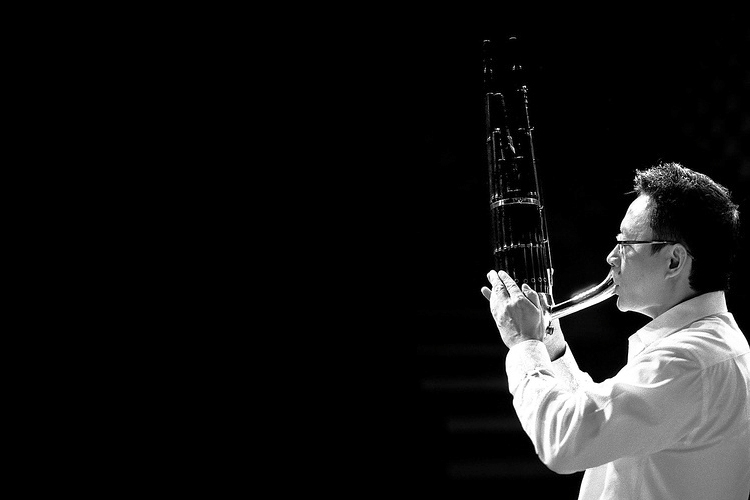
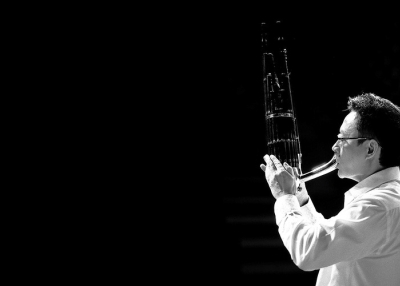
Other instruments also illustrate the spread of musical culture along the Silk Road. The sheng, or Chinese reed-pipe mouth organ, is thought to have originated in southern China, perhaps even among non-Chinese tribal peoples of the far southwest. It was incorporated into Chinese orchestral music by the 5th century BCE (examples of actual instruments have been excavated from tombs in south-central China). The sheng came to be associated with Buddhist liturgical music in China, and spread to Buddhist congregations as far east as Korea and Japan, and as far west as the Buddhist oasis temples of Central Asia. The Buddhist cave-temple murals at Dunhuang show many scenes of angelic beings hovering over Buddhist sacred sites, playing musical instruments, often including the sheng.
Musical traditions are portable, but they are also durable, and stubbornly take root in the lands where they were born. One of the most powerfully surviving features of the old Silk Road today is the variety of music performed, on instruments old and new, indigenous and imported, everywhere from the shores of the Mediterranean to the shores of the Pacific. This living musical heritage allows us to feel a link to thousands of years of trade and exchange among the peoples of the Silk Road.
You Might Also Like

Connect with Us
Asia Society
725 Park Avenue
New York, NY 10021
t: 212-327-9260
[email protected]
Follow Our Blog on Education Week