
Unraveling the 'Iranian Paradox'
Haleh Esfandiari sheds light on regime's "schizophrenic" foreign policy
WASHINGTON, DC, November 30, 2010 - The foreign policy of the current Iranian regime is, all at the same time, "pragmatic, ideological, astute, and reckless."
This was the verdict of Haleh Esfandiari, a prominent Iranian-American academic and Director of the Middle East Program at the Woodrow Wilson International Center for Scholars in DC, speaking here at an Asia Society Washington Center event.
Esfandiari began by elaborating on the "Iranian paradox" noted above. On the one hand, the regime is infused with a sense of grandeur and invincibility born of its sense of history, strategic geographic location, and steady oil income. Consequently, it sees itself as able to act regionally as both a spoiler and responsible state, and internationally as a force capable of frustrating perceived US hegemonic ambitions.
On the other hand, Iranian officials are at the same time deeply insecure about the future of their regime and country, and fearful that the US seeks to empower Iranian civil society as a means of bringing about regime change and rendering Iran a subservient client state.
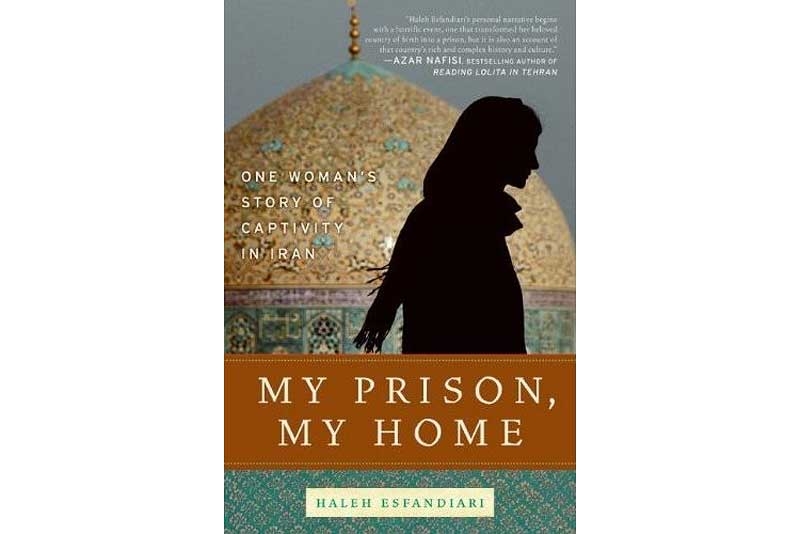
Esfandiari came face-to-face with this official paranoia in 2007, when she was accused by the Iranian authorities of trying to foment an internal revolution—a charge that led to her being arrested and incarcerated for 105 days in Tehran's notorious Evin Prison.
While in captivity, Esfandiari came to understand the mindset of the Iranian intelligence apparatus and internal security forces who, she argued, see themselves as the only actors capable of saving Iran from upheaval. This attitude accounts for their severe oppression of the Iranian Green Movement in 2009 as well as their fervent opposition to the prospect of engagement with the US.
Esfandiari continued with an explanation of why US-Iranian relations have soured since the Iranian Revolution, detailing the legitimate and long-lasting grievances that both countries hold, the legacies of which are still felt today.
After outlining the various efforts made by both sides to engage the other over the past 30 years, she offered her opinion as to why all such efforts had foundered. The matter was not, she argued, a question of mere disagreement on individual issues. Rather, Iran and the US had fundamentally intractable differences regarding regional and global structures of power as well as the existence of Israel.
The talk was followed by a lively Q&A session during which Esfandiari revealed her cautious support for President Obama's policy towards Iran, and her experience with solitary confinement in prison. She also highlighted the positive political role that women have played in Iran. Iran's 2009 election marked the first time male candidates campaigned with their wives, and women had come to assume a very effective force in Iran as both voters and politicians—born in large part from the fact that "the government doesn't know how to deal with them."
Yet the increasing prominence of women in Iranian society also has its dark side: the 2009 elections saw unprecedented levels of brutality against female protestors and activists alongside their male counterparts. Esfandiari finished more broadly by speaking positively of the role of women in the Muslim world, as both political players and entrepreneurs—roles in which "women are there to stay."
Reported by Kate Rosin