
Thailand's Road to Reconciliation
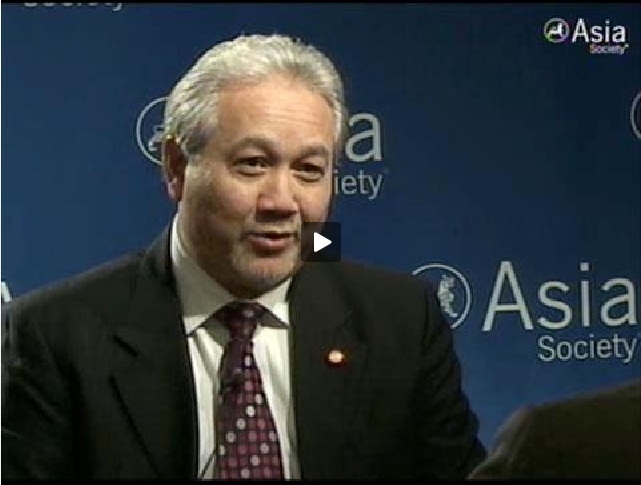
NEW YORK, June 14, 2010 - Thai Special Envoy Kiat Sitthiamorn made a plea for former Prime Minister Thaksin Shinawatra to "come home, face the charges, fight the legal case in Thailand... If he really believes he is innocent, there is really no reason for him to be in exile."
The opposition Red Shirts, who took to the streets in 10 weeks of violent protests earlier this spring, are said to be loyal to Thaksin, who was ousted from office in a military coup. He faces corruption charges. The anti-government protests, which left at least 85 people dead, were eventually broken up by government soldiers on May 19.
Kiat, Thailand's newly appointed Special Envoy to New York and Washington, made the comments in an exclusive live web conversation with Geoffrey Spencer, Vice President of Communications and Marketing at Asia Society.
When asked if there was any chance of peace talks involving Thaksin's faction, he said "Peace talk is not applied in this case. We are dealing with someone who escaped the court decision, he was found guilty."
In a related financial story, Thailand's government announced Monday it plans to buy Singapore's Temasek Holdings' stake in Thaicom, Thailand's satellite service provider.
Temasek acquired its interests in Thaicom when it bought a stake in its parent Shin Corp., the telecommunications conglomerate founded by former Prime Minister Thaksin. It was a controversial deal and he was later removed from office in 2006.
"The fact that Temasek is taking over Shin Corp. is not without legal challenge and there have been a number of legal issues," said Kiat, who emphasized that no one benefits from leaving this problem hanging for too long.
He said the main reason for his visit to the United States was "to send the message to all our friends and allies that we are back in business."
According to the government, 80 percent of Thai people back the five-point reconciliation plan aimed at bringing the nation back together after Thailand's violent unrest, but many critics believe the plan has few supporters.
Prime Minister Abhisit Vejjajiva first announced the plan on May 3. The opposition Red Shirts rejected it.
The special envoy said his government does not want to rush into elections and wants to ensure politicians from all parties can campaign throughout the country without facing intimidation. New elections were among the top demands from the protestors.
When asked when new elections might be held, Kiat predicted, "November [of] this year, provided all parties sign the five-point plan... but at this point November is unlikely."
He said the violence cost Thailand about 5 billion dollars, mostly due to lost tourist revenue, but exports were basically unaffected.
"This year we are expecting 4-5 percent growth, net. Despite this incident, our economic fundamentals are still strong," said Kiat.
When asked what he wanted to tell tourists now, Kiat responded, "Everything is back to normal. Come back!"
Reported by Jennifer Mattson, Managing Editor, Asia Society Online