
A Dim Prognosis for Pakistan’s Troubled Tribal Areas
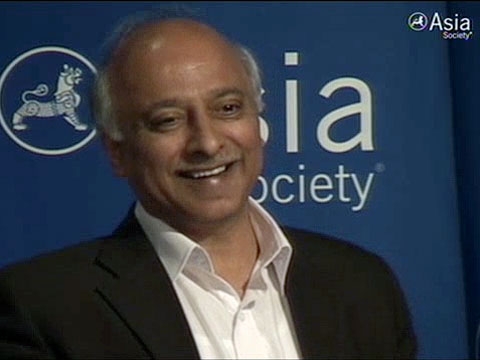
Pakistani journalist Imtiaz Gul describes the migration of the first foreign militants into Pakistan's tribal areas. (2 min., 12 sec.)

Pakistani journalist Imtiaz Gul describes the migration of the first foreign militants into Pakistan's tribal areas. (2 min., 12 sec.)

NEW YORK, June 15, 2010 - Imtiaz Gul, author of The Most Dangerous Place: Pakistan's Lawless Frontier, said Pakistan is now "dealing with the second generation of the Jihadis," in Pakistan's Federally Administered Tribal Areas (FATA), a group of small administrative units in the northwest.

Gul, a leading authority on the region, made the comments at Asia Society New York during a panel discussion with Bernard Schwartz Fellow Hassan Abbas and moderator Jeff Laurenti, Senior Fellow and Director of Foreign Policy Programs at The Century Foundation.

Gul recounted a story when he asked some locals in the area whether or not terrorists were living next door. They responded, "We don't know any terrorists, we only know the Afghan Mujahedeen who have been fighting in Afghanistan who stay here and take shelter."

In recent years, there have been questions about the extent to which the Pakistani military is working to stop terrorism in the volatile border region. Abbas, a former Pakistani policeman, noted, "The last six to seven months have seen unprecedented violence."

Abbas said despite extensive foreign aid from the United States to Pakistan, the local police have few resources. Gul agreed: "If there was an efficient, effective police force in the Northwest Frontier Region, things would have been different."

The panelists said the resistance that Pakistani forces and coalition troops now face in the region is one that they themselves created. During the Cold War, the United States aided the Mujahedeen who were fighting against the Soviets in neighboring Afghanistan. That strategy is coming back to haunt them.

"The genesis of the current crisis lies in what we did," said Gul. "I wish that those mistakes would not be repeated again, and I hope that the US treats Pakistan as a partner, and not as a project."

Reported by Alex Berman

Shop AsiaStore for The Most Dangerous Place by Imtiaz Gul

Pakistan is a country created on the basis of "Two Nation" religious, islamist ideology and thus is unable to integrate different nations of different culture in one mainstream. This ideology is in oposition to the world of non-belivers and jihad against "kafirs" is the only reason of the state existence. We must help Pakistan to form a new state identity based on federation of nations, building welfare of their citizens. For time being Pakistan's army is the only all state subject but on other hand main obstacle to development of democracy. Pakistani talibans are product of demography, "Two Nation Theory", lack of identification with the military state. Sending money and armours there is a waste without proper strategic policy - it is interest of both - The West and Pakistan. Brgds
As an american taxpayer, I resent my taxes going down the ultimate rathole. Pakistan is playing America for a dupe, as it always has. A leftover from cold war days, but there are probably entrenched/"tenured" elements in the US military/security/foreign policy and aid -industrial complexes who favor Pakistan, despite all the evidence to the contrary.
The US has always treated Pakistan as a partner, giving billions of dollars in financial aid and technology, hoping things will change 'this time'. But Pakistan has invariably responded by treating USA as a free source of money and weapons, to further its terrorist activities. Pakistan today is a hopeless case. Any benefit provided will only fall into the hands of terrorists, with the connivance of the government

Post new comment

Your comments are welcome, please adhere to our guidelines

Be respectful. Personal attacks will not be tolerated; nor will profane, abusive or threatening posts.

Keep it short (150 words or less), Stay on topic.

Asia Society reserves the right to moderate all comments and remove or edit for guideline violations. Thank you.

The content of this field is kept private and will not be shown publicly.
Type the characters you see in this picture. (verify using audio)
Type the characters you see in the picture above; if you can't read them, submit the form and a new image will be generated. Not case sensitive.