
Has Social Networking Made Us Anti-Social?
HONG KONG, March 11, 2010 - Four hundred million people globally are registered Facebook users, making this community the third largest "nation" in the world after China and India.
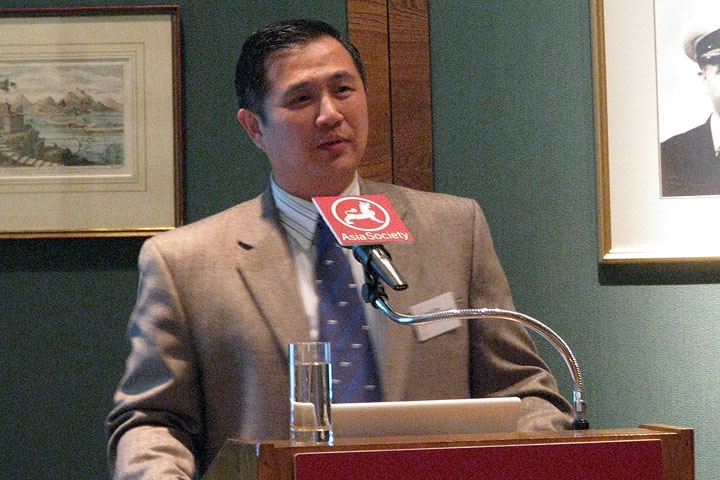
Computer scientist Irwin King told the Asia Society Hong Kong Center, "If Facebook is a nation, it would rank third in the world. Imagine the mass. Imagine what you can do to reach the third most populated nation in the world."
An academic at the Department of Computer Science and Engineering at the Chinese University of Hong Kong, King explained that social computing is the connective tissue linking computing and society. He went on to underscore the phenomenal success of social networking sites.
"If you take a look at global internet traffic in China, the U.S., Japan, India, and Brazil, et cetera, out of the top 10 websites with the most traffic, five are involved in social media. If you don't do it, you will miss the boat. Social computing—it's about how you connect one another."
He pointed out the impact of social computing on everyday life had led to the relatively new science of social analytics or social informatics to track social behavior.
"In terms of public health, social computing can predict people's behavior. Google can predict an outbreak of flu. How? It turns out that when people get sick, they go online and do a search for example, 'remedy for sore throat.' Google has become the oracle of our times. It can track a flu outbreak two weeks before the Centers for Disease Control realizes that is happening."
The power of social networking was all too evident during demonstrations last June in Iran, as people tweeted in real time during the mass rallies, informing the world of events as they unfolded. Inevitably, the best information came from people on the ground. Governments, meanwhile, wary of the impact of the Internet, have attempted to block specific sites. China has barred YouTube on a number of occasions and removed various Twitter sites.
"We were consumers of the Web, now we are the producers. We upload photos, video, blogs. In some way we have become a grassroots movement that produces material, multimedia content, et cetera. What we do is not top down anymore, but bottom up."
Yet while excited at the developments, King did express a level of caution.
"Facebook is 400 million people. If they want to do something, they can turn it into a movement, into power. This is exciting. It is also a little fearful."
Reported by Penny Tang, Asia Society Hong Kong Center