
Vietnamese Language
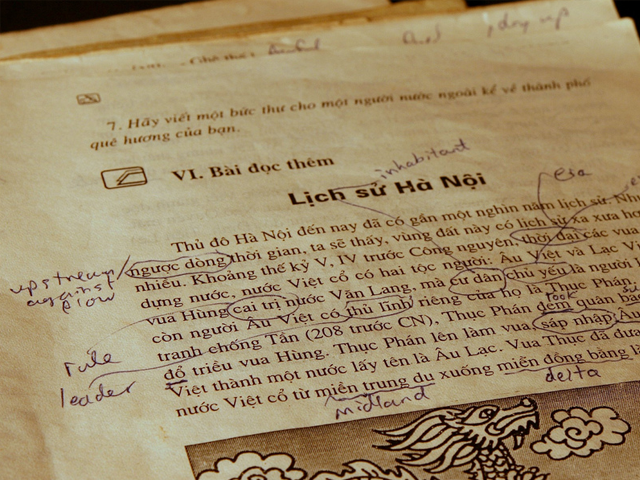
Like Chinese, the Vietnamese language is tonal; that is, the meaning of
words is changed by inflection. Vietnam used the Chinese writing system
and Nom, a Vietnamese script derived from the Chinese writing system in
17th century.
Vietnamese was transcribed into the Roman alphabet by Bishop Alexandre de Rhodes, who added a series of diacritical marks to the alphabet to indicate the five tones that characterize the Vietnamese language.
There are three main regional dialects: Northern, Central and Southern, which differ from one another both phonetically and lexically. However, these differences do not prevent Vietnamese people from understanding one another.
The Vietnamese alphabet has essentially the same alphabet as English. See figure one. There are 12 vowel letters existing in almost all Vietnamese dialects. See figure two.
The pronunciation of these vowels is consistent, unlike in English where the same vowel may be long or short according to the letters which follow it. Consonants There are 28 consonant letters. There are only eight final consonants (c, n, m, p, t, ng, nh, ch) The pronunciation of these consonants slightly differs from one region to another.
Vietnamese was transcribed into the Roman alphabet by Bishop Alexandre de Rhodes, who added a series of diacritical marks to the alphabet to indicate the five tones that characterize the Vietnamese language.
There are three main regional dialects: Northern, Central and Southern, which differ from one another both phonetically and lexically. However, these differences do not prevent Vietnamese people from understanding one another.
The Vietnamese alphabet has essentially the same alphabet as English. See figure one. There are 12 vowel letters existing in almost all Vietnamese dialects. See figure two.
The pronunciation of these vowels is consistent, unlike in English where the same vowel may be long or short according to the letters which follow it. Consonants There are 28 consonant letters. There are only eight final consonants (c, n, m, p, t, ng, nh, ch) The pronunciation of these consonants slightly differs from one region to another.