
Creative Voices: Digital Storytelling for Global Learning
Youth today are looking for opportunities to connect with and participate in the wider world. The enormous popularity of social media and networking websites demonstrates that young people are not only consuming content but also sharing their opinions, ideas, and actions with the world. This exchange often already occurs beyond the traditional boundaries of the school day, but it presents a clear opportunity for global educators. Digital storytelling can help teachers tap into the power of technology as well as the power of youth voice to engage students in learning about global issues.
In Charlotte, North Carolina, young people want to talk about the effect of immigration and diversity on their community, and how tolerance and acceptance can emerge from what is sometimes a cacophony of different cultures. In Mathis, Texas, students are eager to describe the closeness of a small town where families come together to support neighbors in need. In Yogyakarta, Indonesia, young people want to discuss how technology is changing daily life, and who and what progress is leaving behind.
The best digital storytelling programs enable youth to tell the stories that have meaning to them, and emphasize the storytelling process over the final digital product. Most importantly, they help young people make explicit connections between personal, local, and global concerns, assets, and actions. At Asia Society’s International Studies Schools Network (ISSN), a new initiative called Creative Voices leverages a digital storytelling approach for global learning. The process of media production and exchange enables youth to explore their own identities and communities and learn about others in authentic ways, connecting their experiences to larger social, economic, political, and cultural trends.
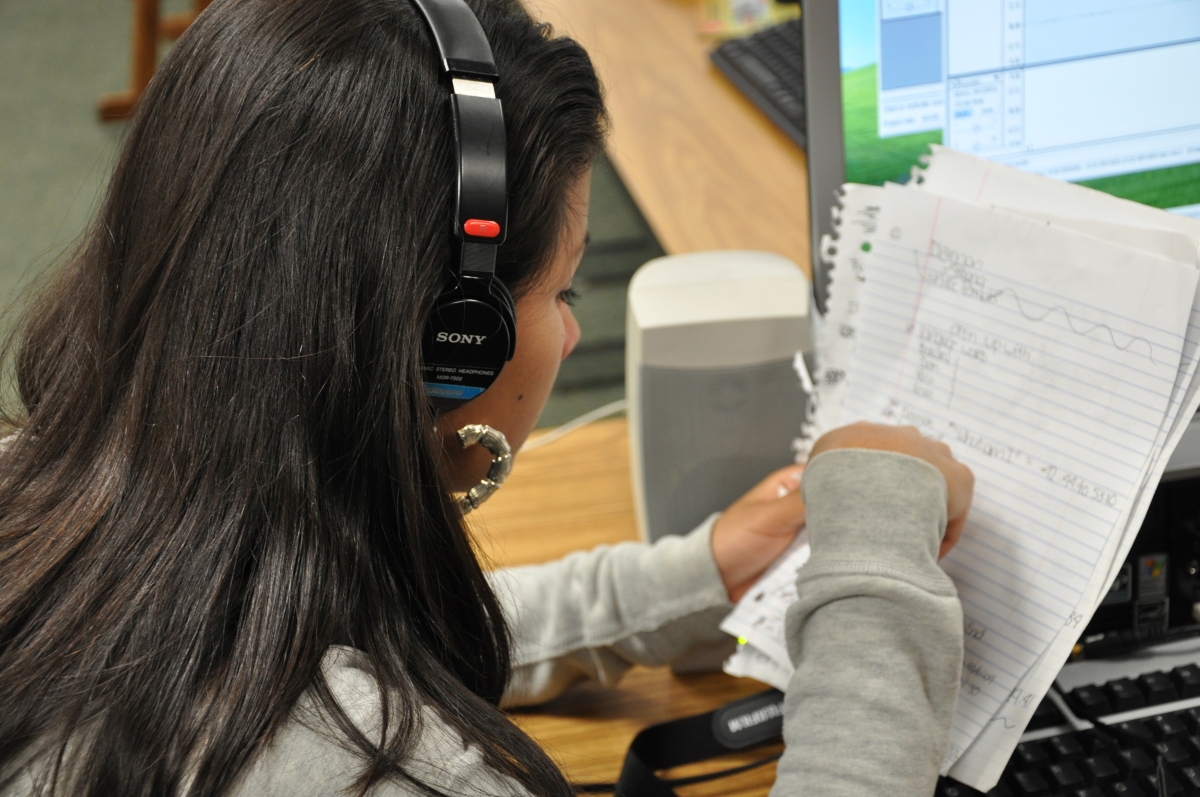
As part of the Creative Voices project, students in the US and Indonesia create and exchange audio slideshows. In the process of creating these multimedia projects, students explore what makes their own experiences and communities unique and then share these stories as a basis for dialogue around common global concerns. In partnership with the media and arts education organization Appalshop, teachers and students in both countries were led through a three-step process.
- Viewing: Students watched a variety of media, including video, audio, and photographs, from American and Indonesian communities and elsewhere in the world. This step helped youth critically view and understand media in the context of globalization by posing essential questions such as: What can media tell you about other people and places? What role does media play in the construction of identity and difference?
- Creating: Students identified topics and produced digital narratives that represent their community in a global context. The selection of stories was guided by such questions as: How can media convey meaning across geographic, cultural, religious, and socioeconomic divisions? How can a story connect with community members but also allow for a transfer of knowledge to those outside of the community?
- Screening: Students shared and discussed the digital narratives in their schools and communities locally, and then shared them on a blog with the youth producers in other countries. The students reflected on essential questions such as: What knowledge and stories do you have to share about this same issue? How can digital stories start a conversation, challenge perceptions, and engage others in building understanding of the world?
A central tenet of the project was that youth, by telling stories, can participate in a critical dialogue that connects their own experiences and community narratives with broader concerns shared by peers around the world. At the same time as students were learning about media literacy and media production, teachers in English, history, and social studies helped students learn about Indonesia’s location, history, and culture. Students learned about the physical environment of Southeast Asia and how this environment relates to the peoples, cultures, and livelihoods of the region.
The media projects were then posted on a blog for exchange and discussion among the schools in both countries. An important step was to have the students in each community first review the media projects produced locally and post comments, before viewing and discussing the media projects from other communities outside of their own. This allowed a broader number of students to become engaged in the dialogue and, through the comments, provided additional context and information for the students from other communities.
To view some of the audio slideshows and the dialogue between students in the US and Indonesia, click on the links to the right in "Also in This Series".
Creative Voices of Muslims in Asia is a three-year initiative implemented by Asia Society with support from the Doris Duke Foundation for Islamic Art. The goal of this initiative is to foster an increased understanding of the diversity of experience and voices within the multicultural societies of contemporary United States and Asia. The initiative includes a series of exhibitions, cultural events, and public programs at Asia Society’s headquarters in New York City, as well as a youth media exchange between high schools in the U.S. and Muslim countries in Asia.