Animal Bingo

This activity gets kids excited about the natural world, while practicing listening comprehension, word-image association, and hand-eye coordination.
To do ahead of time
- Print one copy of 'Bingo pieces to cut up.' Cut them so each image is one piece. Put all the pieces in a bag and shake it up.
- Find game pieces for the kids—put about ten pieces for each child in a paper cup. Some ideas for game pieces: dried beans or macaroni, or washed pennies.
- Print one bingo card for each student, but make certain to allow as many card types as possible. For example, if you have 15 kids, print three of each bingo card.
- Think about a small token reward for winners. It can be a token of happiness (everyone gets up and cheers for the winner, or first in line for recess) or points or some other treat.
During class
- Introduce the game of Bingo by explaining that it is a game invented five hundred years ago in Italy. Because it is so much fun, it quickly spread throughout Europe, then the world. Bingo is typically played with numbers, but in this activity, explain that you will play with pictures instead.
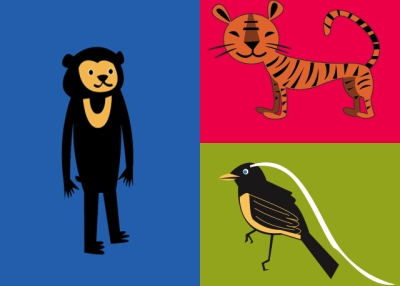
- Ask students which animals live around them. Ask them if they live near a giant clam, or a real panda bear. Explain that the earth has many different habitats that support life. Animals and plants can only live in a habitat that suits them. Mostly, these are very special habitats that exist in different places on earth. Sometimes these habitats can be mimicked by zoos and aquariums, but man-made habitats can only support a few animals.
- Introduce each animal in your bag by pointing to their habitat on a map. Use the fact sheet, but say more about the environment, particularly if your students have learned about habitats in the past.
- Show students how to play the game. Demonstrate pulling out a card, calling out the name of the animal, and showing kids the card. The children who have the exact same animal and image on their game card should put a game piece (dried bean or clean penny) on that image. When a child has an entire row, column, or diagonal filled in, he or she should shout "BINGO!" The first child to get a Bingo—with confirmation—wins the round.
- Ask the student what his/her favorite animal is in the winning row, column or diagonal.