Teaching the World
A New Requirement for Teacher Preparation

November 2004
It is commendable that the Kappan has devoted this special section to examining what to do about the gap between what students in America’s K-12 schools need to learn about the world outside our borders and what, in fact, they are learning. The world is changing, and, inescapably, America is changing along with it. Unfortunately, our schools are not responding to these challenges as rapidly or as effectively as they should. We know that there are deep problems throughout our decentralized education system that will not be resolved quickly or easily. International education has not been properly emphasized in state standards for what students should know, in the assessments of what students are learning, in textbooks and other teaching materials, in states’ curricula, or in the priorities (i.e., reading and math) encoded in the No Child Left Behind Act (NCLB). International content simply has not been a focus of most of the current efforts to strengthen student learning.
But we must acknowledge that one reason for the lack of attention to international education in our schools is that our teachers have not been prepared to teach students about other nations, regions, and peoples. Preservice preparation programs and inservice professional development initiatives have not adequately responded to the realities of today’s globalized world. One might think that a likely place to find an emphasis on international content would be in the p reparation for teaching history. However, in its groundbreaking 2001 report Asia in the Schools, the National Commission on Asia in the Schools reported that not one of America’s 50 top-ranked schools of education required students preparing to teach history and social studies to take even one course in Asian history.
Another logical place to search for an emphasis on international education would be in state licensing requirements for teachers. But the same report concluded that none of the licensing provisions in the 50 states required teachers to study Asia and other regions and cultures as part of their teacher preparation program. [1]
Achieving change in teacher education is not easy. There are over 1,000 institutions offering preservice programs for prospective teachers. Programs vary across states and across institutions within states. Courses are taught by some 20,000 faculty members, many of whom are not themselves knowledgeable about other peoples and regions. Teacher preparation programs are in large part focused on preparing students to be teachers in their local communities and thus may underemphasize international issues and content. Most teachers are trained at state universities, but expertise about other regions is concentrated in the area studies programs of major research universities. Fewer prospective teachers than students in other disciplines take advantage of opportunities to study abroad. [2]
There are those who have totally given up on teacher education. Some pessimists simply don’t believe that any teacher education is useful or needed; they would prefer that teachers complete a liberal arts education and then learn to teach on the job. Some involved in the debate are impatient, demanding that there be much quicker changes made in the skills of today’s teachers than can be achieved through reforms in preservice programs alone. And, let’s admit it, some have a political agenda that seeks to weaken and, if possible, unravel the interlocking arrangements that link the quality control programs of the teaching profession. These programs include accreditation systems such as NCATE (the National Council for Accreditation of Teacher Education), state licensure requirements, advanced professional certification through the National Board for Professional Teaching Standards (NBPTS), and teacher education programs.
Teachers and teacher educators operate under a sometimes bewildering array of federal and state directives — state assessment programs that currently contain little if any international content; two decades of emphasis on reading and math skills, accompanied by an unintended de-emphasis of other curricular areas; texts for history, language arts, and social studies devoid of international content; and little demonstrable priority in federal and state funding for international content in preparation and professional development programs. Some gaze at these institutional complexities and despair. They want reform but want others to figure out how to get it done.
That's Not my Job
These people call to mind the following fable of futility, attributed so far as I know only to anonymous sources:
This is a story about four people named Everybody, Somebody, Anybody, and Nobody. There was an important job to be done, and Everybody was sure that Somebody would do it. Anybody could have done it, but Nobody did. Somebody got angry about that, because it was Everybody’s job. Everybody thought Anybody could do it, but Nobody realized that Everybody wouldn’t do it. It ended up that Everybody blamed Somebody when Nobody did what Anybody could have.
Fortunately, this cynical fable does not describe the teacher education field today. To be sure, there is no silver bullet that will by itself “fix” any problem in American education or in the preparation of teachers. But changes are beginning to emerge, and they come from a variety of sources. Some are driven by top-down reforms in policy and regulation. Some emerge from the constant crossfire among teacher educators themselves and among teacher educators and their colleagues from other parts of the higher education community. Other changes “bubble up” as individual teacher educators change the content of the courses they teach. Still other changes are stimulated by foundation initiatives and grants. The “art of the possible” is alive and well today in teacher education.
Here are signs of hope and reform already evident in the system:
- Increasing numbers of teachers are learning about other regions through professional study trips, such as those conducted by the Fulbright and People to People programs, which provide the opportunity for hundreds of teachers each year in travel to China, Russia, and other countries.
- A decade of farsighted grantmaking by the Freeman Foundation and other philanthropies has focused on helping teacher educators and teachers travel to and learn about Asia.
- Teacher preparation institutions are establishing partnerships with similar institutions in other countries.
- NCATE and NBPTS standards are reflecting the need for teacher education programs to attend to international content in history and social studies, in foreign languages, and in other fields where appropriate.
- Access to the Internet and e-mail is empowering teachers to acquire materials and share information about international content with colleagues.
- Some states involved in the States Institute on International Education in the Schools are trying to link teacher preservice training and inservice professional development to needed curricular reforms. [3]
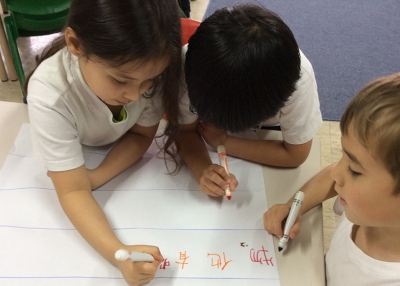
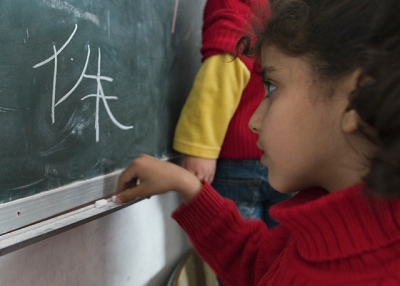
An encouraging initiative has recently come from the College Board, which in 2004 began to develop an Advanced Placement course in Chinese language. [4] A separate course in Japanese is expected to follow soon. Professional development programs have been designed to prepare teachers to teach these new AP courses.
We foresee many changes coming from teacher educators as colleges revise their course requirements for students preparing to teach history, social studies, language arts, and other subjects. Classroom teachers are developing new units of instruction and using the Web to share them with colleagues— and with teacher educators who need to adapt their own teaching in similar ways.
We can expect other changes to occur as governors, business leaders, and legislators demand that schools prepare students to live and compete in today’s interconnected world and provide the support for the necessary teacher preparation and professional development.
Because the need for international education reflects a compelling national interest, there is a rationale for a federal initiative to accelerate and strengthen reforms already under way. Think of the impact achieved during the 1960s by the National Defense Education Act, which invested in strengthening teacher preparation and professional development in targeted curricular areas. Federal requirements that handicapped children be educated in regular public schools, as well as federal funding, led to important and successful responses in teacher preparation and professional development.
Building international capacity in the teaching field quickly will require the President and Congress to take a similar step and provide funding in the 2005 budget for international curricular materials and teacher p rofessional development programs. These federal funds could be used for summer workshops for teachers and teacher educators on other regions and cultures, for developing curricular materials that infuse international content into the curriculum of many subjects and grade levels, for encouraging partnerships and linkages between U.S. schools and those in other nations, for facilitating the use of the Web to disseminate new course materials for teacher educators and teachers, and for developing and disseminating model assessment items that could be included in state and local tests. It’s encouraging that Secretary of State Colin Powell and Secretary of Education Rod Paige have strongly endorsed the need to increase student learning about other countries and regions.
Teachers—and the college professors who help to prepare them—are ready and willing to address the need to get more international content into actual teaching (or, as I like to put it, into the “taught curriculum”). They will get this done. It will take time as well as determined initiatives both from within the field and from policy makers. But it will happen, because there is such a compelling connection between our national security and economic growth, on the one hand, and what our students learn about the world.
This article was originally published in Phi Delta Kappan (November 2004). Reprinted with permission.
Author: James A. Kelley is founding president of the National Board for Professional Teaching Standards.
NOTES
1 National Commission on Asia in the Schools, Asia in the Schools: Preparing Young Americans for Today’s Interconnected World, (New York: Asia Society, 2001), 29.
2 John D. Heyl and JoAnn McCarthy, “International Education and Teacher Preparation in the U.S.,” paper presented at Global Challenges and U.S. Higher Education: National Needs and Policy Implications, Duke University, Durham, N.C., 24 January 2003. and
Ann I. Schneider, “The State of Teacher Training for K-12 International Education,” paper presented at Global Challenges and U.S. Higher Education: National Needs and Policy Implications, Duke University, Durham, N.C., 24 January 2003.
3 Marta Castaing, States Institute on International Education in the Schools Report (New York: Asia Society, 2003).
4 “Chinese Officials and College Board Announce Advanced Placement Course in Chinese Language and Culture,” press release, The College Board, 5 December 2003.