Improving Teacher Quality Around the World
2011 International Summit on the Teaching Profession

"In South Korea, teachers are known as nation builders," US President Barack Obama said on a recent spring morning. "I think it's time we treated teachers with the same respect."
Thus set the mood for the International Summit on the Teaching Profession, which was hosted by US Secretary of Education Arne Duncan.
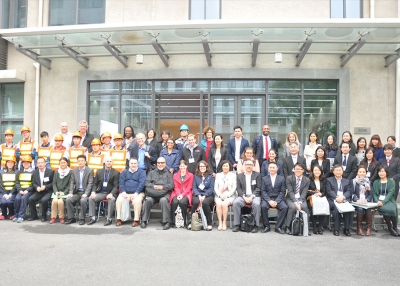
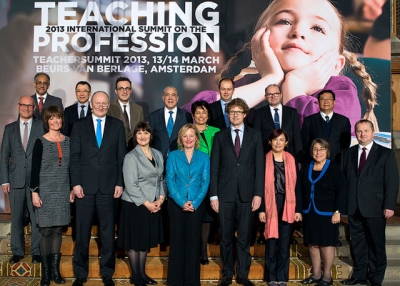
The summit convened education ministers, master teachers, national union leaders, and education organization leaders from countries with high performing and rapidly improving educational systems. The purpose of the summit was to identify best practices worldwide that strengthen the teaching profession and raise student achievement.
"When it comes to teaching, talent matters tremendously," said Secretary Duncan. "But great teachers are not just born that way—it takes a high-quality system for recruiting, training, retaining, and supporting teachers over the course of their careers to develop an effective teaching force."
"Nowhere is the rapidity of educational change and improvement greater than in Asia," said Asia Society vice president Tony Jackson. Indeed, eight out of the top 10 performing school systems are in Asia. "It's important to have this forum for the exchange of ideas between educators in the U.S., Asia, and elsewhere to improve student performance and develop the competencies they need for success in an interdependent world."
"The prosperity of our nations depends on whether we succeed to attract the brightest minds into the teaching profession and the most talented teachers into the most challenging classrooms," said OECD Secretary General Angel Gurría. "Working directly with leaders and teachers from across the globe is key to investing in our most precious asset: our youth."
Participants engaged in a discussion on the vital role teachers play in advancing progressive, sustainable education reform. The summit discussions and emerging lessons from around the world were released in a report titled “Improving Teacher Quality Around the World: The International Summit on the Teaching Profession.” The report was authored by Asia Society’s Senior Advisor for Education Vivien Stewart on behalf of the Summit’s partner organizations.
“The practices of top-performing countries can help America accelerate student achievement and elevate the teaching profession,” said Secretary Duncan. “The lessons outlined in the International Summit on the Teaching Profession report reinforce the understanding of education leaders around the world that a high-quality teaching profession is built on common principles and cornerstones in different education systems.”
“The report concludes that achieving consistency in teaching quality has become central to the agenda of every country," said Stewart. "To make progress, governments and teachers' organizations will need to work together, as they did at the summit, to invent a new vision for the teaching profession."
The Summit was a first step in what will be an ongoing dialogue among these countries about the best way to achieve and sustain best practices to improve both teaching and learning.
Asia Society, along with the US Department of Education, OECD, National Education Association (NEA), the American Federation of Teachers (AFT), the Council of Chief State School Officers, public broadcasting station WNET, and Education International co-hosted the event.