Islam in Southeast Asia
by Michael Laffan
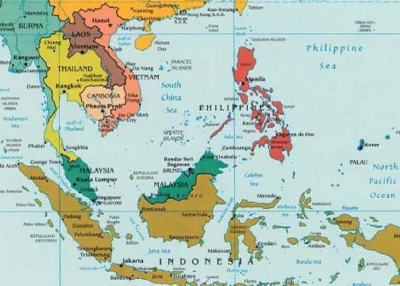
Asia is home of 65 percent of the world's Muslims, and Indonesia, in Southeast, is the world's most populous Muslim country. This essay looks at the spread of Islam into Southeast Asia and how religious belief and expression fit with extant and modern polictical and economic infrastructures.
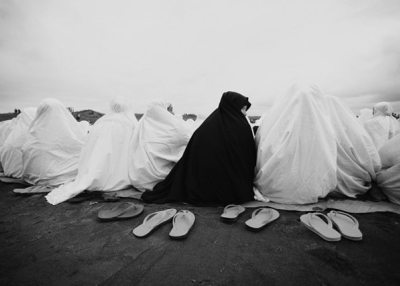
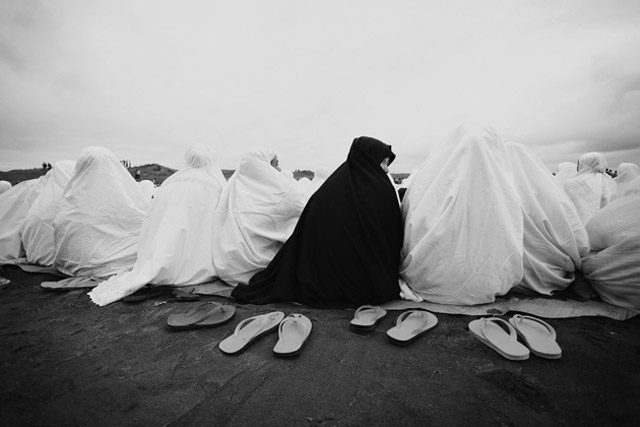
It is difficult to determine where Islamic practice begins or ends in any Muslim society, especially as the teachings of Islam encourage Muslims to be mindful of God and their fellow believers at all times. Still, the absence of publicly demonstrated mindfulness of God—whether expressed in terms of the wearing of special dress, such as the many sorts of veils donned by Southeast Asian women, or by recourse to frequent enunciations invoking His name—need not be taken as meaning that the person is any less a Muslim. Indeed, one’s faith is not to be measured by outward acts alone, and Muslim tradition ascribes greater weight to the personal intention of the believer than to outward appearance. Even so, what follows is an explanation of some aspects of the outward expression of Islamic identity in Southeast Asia.
Unity and Diversity
Although the national motto of Indonesia, “Unity in diversity” (Bhinneka tunggal ika), was intended to be an explicitly national one, it is no less applicable to the community of Southeast Asian Muslims, as well as to Muslims the world over. When Muslims come together to worship in the mosque on Friday, or when they perform their daily prayers as individuals, they face the same direction. As such they participate in a unitary tradition. The same might be said of when Muslims greet each other with the traditional Arabic blessing “Peace be with you” (al-salam `alaykum), when they undertake the fast (sawm) during the month of Ramadan, or when they make the pilgrimage (hajj) to Mecca.
If asked about the core elements of their faith and practice, many Muslims will point to the five basic duties of Islam. These consist of the profession of faith (shahada), the daily prayers (salat), the hajj, fasting in Ramadan (sawm), and the giving of alms (zakat). However, there is a whole range of calendrical celebrations and rites of passage associated with Islam, not to mention the simple acts of piety that some perform before carrying out basic actions. This might include invoking God’s name before eating or washing one’s face and limbs before prayer. Once again, these acts are shared across Islamic time and space.
On the other hand, many distinctions between believers of different cultural and theological traditions remain in evidence. Even when the global community of the faithful gather in Mecca for the hajj and don the same simple costume of two unsewn sheets (known as ihram), they often travel together in tightly managed groups of fellow countrymen or linguistic communities—at times with tags displaying their national flags. By the same token, there are many specific local practices that are felt to be thoroughly Islamic in Southeast Asia, but these, on occasion, have been condemned by Muslims of different cultural backgrounds by virtue of their absence in, or displacement from, their own histories. Local practices include the use of drums (bedug) in place of the call to prayer (adhan), or the visitation of the tombs of the founding saints of Java.
Other such examples of distinct Southeast Asian practices might be linked to the wearing of the sarung (a practice shared with Muslims and non-Muslims throughout Southeast Asia and the Indian Ocean), the relatively late circumcision of young males (often celebrated as a major event in village life), the use of shadow puppets (believed by some communities to have been invented by one Muslim saint to explain Islam in the local idiom), or the many popular verse tales of the exploits of an uncle of the Prophet, Amir Hamzah, drawn from Persian and Arabic originals. Even if such practices are regionally distinct or viewed askance elsewhere, if not contested openly, such practices are nonetheless seen as ways of connecting to a faith that is global and egalitarian.
Arabic and the Qur’an
One undeniably universal expression of religiosity is the recitation (qira’a) of the Qur’an, which all Muslims are enjoined to learn as soon as they are able. The Qur’an is understood to be the eternal expression of God’s will revealed through the Angel Gabriel to the Prophet Muhammad, who is believed by Muslims to be the last messenger appointed to mediate between God and humanity. Indeed the Qur’an is also affirmed as the final validation of the messages of all the prophets before him, including those known in the Jewish and Christian traditions. These include Abraham, Joseph, and Jesus, though there are additional figures such as Iskandar (Alexander the Great) and the enigmatic Khidr.
The Qur’an contains stories of all these prophets and many accounts of the difficulties that they—and Muhammad in particular—had in being accepted by their own people before winning them over and establishing God’s law (shari`a) among them. It is further replete with parables ranging over a broad range of human experience, and its recitation brings feelings of closeness to God and His Prophet, as well as solidarity with Muslims all over the world. Some Southeast Asians, such as the Indonesian Hajja Maria Ulfah, have even obtained international recognition for the quality of their recitations.
Yet while the Qur’an may be recited as proficiently, and as often, in Jakarta and Pattani as in Mecca or Algiers, the fact remains that the Holy Text was revealed in Arabic, and in the Arabic of Muhammad’s day. As such all Muslims require explanation of its meanings and those of non-Arab traditions—whether in India, Central Asia or Southeast Asia—require the additional intervention of translation.
The task of the explanation of the divine text is helped, in part, by the fact that Malay (both in its modern Indonesian and Malaysian variants), Javanese, and several other Austronesian languages spoken in insular Southeast Asia, are infused with Islamic terms. This process of linguistic appropriation may be linked with the expansion of a Muslim role in the trade linking the port towns of Southeast Asia, starting in the thirteenth century. It was in this way that the Arabic of the Qur’an, its associated scholarly traditions, and the everyday speech of many of the visiting traders suffused local languages—Malay in particular—with both sacred and profane terms. For example, the Arabic word fard (broadly meaning an obligation), has left two traces in Malay: one with the same sense of a “religious obligation” (fardu), and the other as the more general verb “to need” (perlu).
Regardless of the presence of Arabic elements in the Malay vocabulary that are not specifically religious, Southeast Asian Muslims have long been mindful of the sacred role that Arabic has played in what has increasingly become their history as much as that of Arabs. Certainly, there is a long history of the translation and explication of the Qur’an in the region, although it is important to note that in the Islamic tradition a translation, being the result of human interpretation, may never be elevated to the status of the divine text itself.
This principle, along with heightened contacts with new forms of Islamic thought being propagated from British-occupied Egypt and India in the late nineteenth century, led to debates in the similarly-colonised entities of Indonesia (then the Netherlands Indies) and Malaysia about the legitimacy of attempting to produce a translation—particularly after the widespread availability of printing presses and heightened literacy made it a commercial possibility. Some even argued that written translation (as opposed to the glossing of words and fragments) had never been permitted by Islamic law.
Whether permitted or not, such translations have long been made. Indeed, among the Islamic books brought back to Europe from Southeast Asia in the sixteenth and seventeenth centuries were Qur’anic texts, religious treatises, and works in verse that made use of holy scripture. These include the works of the mystical poet Hamzah Fansuri (d. 1527), who liberally infused his writings with Qur’anic verses, as well as more neutral Arabic, Persian, and Javanese terms, while stressing his distinct identity as a Malay of Fansur, a port-town of Sumatra.
Script and Identity
Alongside its major oral contribution to Southeast Asian Islamic identity, Arabic also has had a visual impact with the adoption of its script for many local languages, with modifications to suit local phonemes such as the sounds “p” and “ng.” By the time Hamzah Fansuri would compose his Malay poems, this phonetic form of writing had already been in use for some three centuries, whether for commemorative stones or for further Islamic propagation. This did not mean that the script displaced earlier methods of writing immediately or permanently. In some cases, local scripts have been maintained for both religious and non-religious texts. Even so, by the time that the Portuguese arrived in Southeast Asia in significant numbers at the beginning of the sixteenth century, Malay was being written primarily with Arabic letters and in a cursive form that is immediately identifiable as pertaining to the region.
In Indonesia, the Arabic script would only be displaced after the widespread popularization of newspapers and school texts in roman script starting in the late nineteenth century, and ever more so in the twentieth when reformist Muslims founded schools to provide the opportunities for modern education largely denied by the Dutch and British. Arabic and Arabic script remain in use in many Islamic schools in Indonesia (now known broadly as pesantren), and both are still used on billboards and signs recommending certain behaviors as Islamic. For example, an advertising campaign in West Sumatra in the 1990s was accompanied by Arabic statements attributed to the Prophet such as “Love of cleanliness is a part of belief ” (Hubb al-nizafa min al-iman).
The Arabic script remains strongly linked to Muslim identity in neighboring Malaysia and Brunei. This is especially the case in Malaysia, with its prominent non-Malay minorities; and it is further discernible in southern Thailand, where the script serves to mark the Muslim community off from the Thai-Buddhist majority and remains the written medium for a considerable local Malay-language publishing industry.
The Study Circle and Its Absence
Whereas Arabic has long been studied by Muslims in Southeast Asia, due to its elevated status as the language of revelation and its importance for connection with the Middle East as the source of Islam, and even though it has made its contribution to the oral and written cultures of the region, the fact remains that Southeast Asians require the aid of teachers and glossaries to make the texts of Islam comprehensible and applicable in daily life. To this end, the months spent learning the Qur’an under the guidance of a teacher is often a crucial period in a child’s life. At the end of this period of study a celebration (known as khatm al-Qur’an) is held in the family home.
More advanced studies of Islam usually require the sort of in-depth education offered by traditional religious schools, such as Indonesia’s pesantrens. Here students learn the requisite texts concerning pronunciation and grammar by the use of glosses in their own languages and various mnemonics or songs. This will allow them to make sense of more advanced works concerning the formal rules laid out in Islamic law defining social interaction, as well as those pertaining to the inculcation of moral values (akhlaq). At all stages a teacher ensures that the individual student has properly mastered a text before advancing to any higher stage of learning. Still, even in these traditional schools—which may be found throughout Southeast Asia and which allow the movement of individuals across national borders— there is a blurring between global religious practice and indigenous cultural expressions. Even when they are in Arabic, many of the songs learned or the texts mastered are related to a specifically Southeast Asian source of inspiration, either from a creator born in the region who assumed a place of importance in Mecca, such as Nawawi of Banten (1813-97), or at the hands of a foreigner who once sojourned through its mosques and fields, such as Nur al-Din al-Raniri (d. 1656). Furthermore, in recent times students have begun to popularize and rephrase many of the popular poems sung in praise of the Prophet. Some musical groups have reached wide audiences by incorporating Arabic lyrics, and Arabic songs have been composed and sung in Southeast Asia with the aim of propagating certain messages among a broader community of Muslims—ranging from gender equity to jihad.
On the other hand, there are also a great many Southeast Asians who never receive such traditional Islamic schooling, who have not learned Arabic or mastered the Qur’an, and for whom such lyrics may be incomprehensible. Many still feel themselves to be full members of the Muslim community (umma), though. For, while they may not fully understand the literal rules of the provisions of Islamic law, they feel that the texts in which it is explained are part of their own Muslim cultural heritage, with which they might connect at rites of passage such as birth, marriage, and the commemoration of death.
Religio-Cultural Intersections and the Modern State
Just as the colonial regimes sought to monitor and regulate the pilgrimage and Islamic schools, the modern state often attempts to play a role in defining religious and cultural practices at both the level of religious obligation and as officially-sanctioned cultural expression. The most obvious interventions may be seen in the specifically national mobilizations for the Hajj. Each year, for example, Indonesia supplies one of the largest contingents of pilgrims (over 200,000 people) for the annual series of ceremonies that take place in Mecca and its surroundings. To get there on such a massive scale necessitates a large degree of national coordination, including the provision of financial support. Beyond finance and coordination though, states also play a proactive role in determining what variants of religious practice may be tolerated, particularly when those variants seem inimical to the government itself or which contest, sometimes violently, the depth of religious commitment of their fellow countrymen. For example, both Malaysia’s quietist Dar al-Ar qam organization, and the radical Ngruki network in Indonesia have seen their activities stopped or severely curtailed in the past decades.
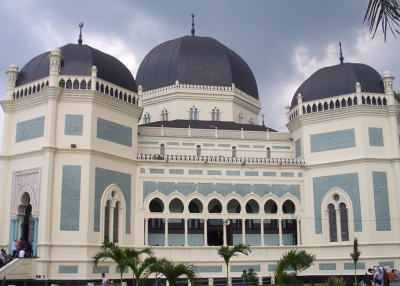
Less tangible, but no less important, than contesting expressions of Islam framed in political terms or in alternative dress and practice, is the role of the state in presenting the style of religiosity felt to represent best the genius of its peoples. Sometimes the gaze is directed outward, sometimes inward. For example, one might think in terms of the architectural designs for many of the region’s modern mosques, which increasingly have a distinctly internationalist style owing more to India and Arabia than Southeast Asia; with minarets and onion domes and arches added to or supplanting the old multilayered pyramidal roofs.
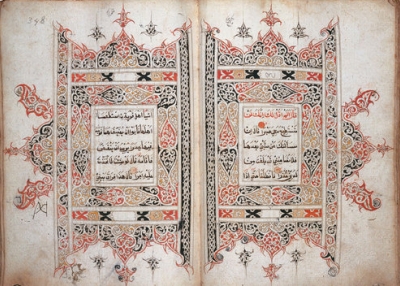
On the other hand there is the Indonesian national museum for the Qur’an in Jakarta, with its showcase holy text (Al-Qur’an Mushaf Istiqlal) that has one page decorated in the style of each province of the Republic. But while the illuminations of Aceh have a distinct pedigree, many of the others are modern inventions designed to help Indonesians to think of the history of their country and its artistic expressions as an inevitable and natural process of combination given added meaning by Islam.
This is not to say, however, that this has always been the case, or that such increasingly Islamic views of history are universally accepted. Both Indonesia and Malaysia include substantial non-Muslim minorities, minorities that at times have become scapegoats during periods of economic uncertainty or because of the taint of imagined collaboration with colonial forces or even as fifth columnists for international communism. Indeed, Indonesia itself has a strong history as an avowedly secularist state, whose officials once placed more emphasis on the region’s pre-Islamic heritage in the form of temple remains. Its best-known author, the late Pramoedya Ananta Toer, even downplayed the role of Islam in the making of Indonesia and focussed instead on the powerful ideas of unity engendered by resistance to Dutch colonialism across the archipelago.
In either form of history, though, whether the view of an Islamic or an areligious anti-colonial national past, it is important to see Southeast Asians placing themselves in relation to a wider world, a world in which “Islam” offers just one set of civilizational practices to draw upon and which may be freely combined with others. In fact, many of the expressions that feed into globalising trends beyond the reach of the state, and redolent of an Islamic identity, are certainly at great variance to what might be conceived of as “traditional” Islam. Here we might think of the many popular groups that fuse the musical styles of the Middle East and Southeast Asia with a presentation owing something to western music videos, or the instructional literature for children now replete with illustrations drawn in the style of Japanese manga. And, again, there is a sphere of personal reflection and reaction that can seem outside the control of the state or that strives to take more from within the Southeast Asian artistic tradition than what lies beyond, whether in poetic musings on experiences in the mosque, or A. D. Pirous’s luminous canvases, which reflect upon both the eternal message and the troubled experiences of his own Acehnese people, who once fought for Indonesian independence in the 1940s but found themselves newly oppressed in the decades that followed.
Certainly one gains a more intimate view of the inner spirituality of Southeast Asian Muslims in such expressions. Even so, while Muslims are joined to each other by the medium of a religious inheritance in their archipelagic homelands, as well as to the broader Muslim community, in the expression of that identity they are undeniably drawing at all times from the images and sounds of the wider, shared world.