
Indian Society and Ways of Living
Organization of Social Life in India
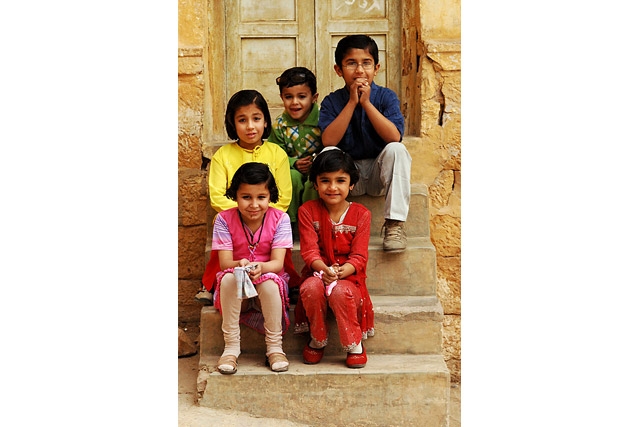
India offers astounding variety in virtually every aspect of social life. Diversities of ethnic, linguistic, regional, economic, religious, class, and caste groups crosscut Indian society, which is also permeated with immense urban-rural differences and gender distinctions. Differences between north India and south India are particularly significant, especially in systems of kinship and marriage. Indian society is multifaceted to an extent perhaps unknown in any other of the world’s great civilizations—it is more like an area as varied as Europe than any other single nation-state. Adding further variety to contemporary Indian culture are rapidly occurring changes affecting various regions and socioeconomic groups in disparate ways. Yet, amid the complexities of Indian life, widely accepted cultural themes enhance social harmony and order.
Themes In Indian Society
Hierarchy
India is a hierarchical society. Whether in north India or south India, Hindu or Muslim, urban or village, virtually all things, people, and social groups are ranked according to various essential qualities. Although India is a political democracy, notions of complete equality are seldom evident in daily life.
Asia Society in India
Learn More
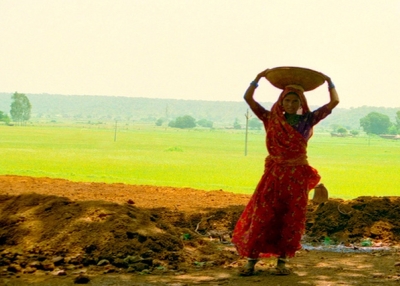
India offers astounding variety in virtually every aspect of social life.
Societal hierarchy is evident in caste groups, amongst individuals, and in family and kinship groups. Castes are primarily associated with Hinduism, but caste-like groups also exist among Muslims, Indian, Christians, and other religious communities. Within most villages or towns, everyone knows the relative rankings of each locally represented caste, and behavior is constantly shaped by this knowledge.
Individuals are also ranked according to their wealth and power. For example, some powerful people, or “big men,” sit confidently on chairs, while “little men” come before them to make requests, either standing or squatting not presuming to sit beside a man of high status as an equal.
Hierarchy plays an important role within families and kinship groupings also, where men outrank women of similar age, and senior relatives outrank junior relatives. Formal respect is accorded family members—for example, in northern India, a daughter-in-law shows deference to her husband, to all senior in-laws, and to all daughters of the household. Siblings, too, recognize age differences, with younger siblings addressing older siblings by respectful terms rather than by name.
Purity and Pollution
Many status differences in Indian society are expressed in terms of ritual purity and pollution, complex notions that vary greatly among different castes, religious groups, and regions. Generally, high status is associated with purity and low status with pollution. Some kinds of purity are inherent; for example, a member of a high-ranking Brahmin, or priestly, caste is born with more inherent purity than someone born into a low-ranking sweeper, or scavenger, caste. Other kinds of purity are more transitory—for example, a Brahmin who has just taken a bath is more ritually pure than a Brahmin who has not bathed for a day.
Purity is associated with ritual cleanliness—daily bathing in flowing water, dressing in freshly laundered clothes, eating only the foods appropriate for one’s caste, and avoiding physical contact with people of significantly lower rank or with impure substances, such as the bodily wastes of another adult. Involvement with the products of death or violence is usually ritually polluting.
Social Interdependence
One of the great themes pervading Indian life is social interdependence. People are born into groups—families, clans, subcastes, castes, and religious communities—and feel a deep sense of inseparability from these groups. People are deeply involved with others, and for many, the greatest fear is the possibility of being left alone, without social support. Psychologically, family members typically experience intense emotional interdependence. Economic activities, too, are deeply imbedded in a social nexus. Through a multitude of kinship ties, each person is linked with kin in villages and towns near and far. Almost everywhere a person goes, he can find a relative from whom he can expect moral and practical support.
In every activity, social ties can help a person and the absence of them can bring failure. Seldom do people carry out even the simplest tasks on their own. When a small child eats, his mother puts the food into his mouth with her own hand. When a girl brings water home from the well in pots on her head, someone helps her unload the pots. A student hopes that an influential relative or friend can facilitate his college admission. A young person anticipates that parents will arrange his or her marriage. Finally, a person facing death expects that relatives will conduct the proper funeral rites ensuring his own smooth passage to the next stage of existence and reaffirming social ties among mourners.
This sense of interdependence extends into the theological realm. From birth onward, a child learns that his “fate” has been “written” by divine forces and that his life is shaped by powerful deities with whom an ongoing relationship must be maintained.
Family and Kinship
Family Ideals
The essential themes of Indian cultural life are learned within the bosom of a family. The joint family is highly valued, ideally consisting of several generations residing, working, eating, and worshiping together. Such families include men related through the male line, along with their wives, children, and unmarried daughters. A wife usually lives with her husband’s relatives, although she retains important bonds with her natal family. Even in rapidly modernizing India, the traditional joint household remains for most Indians the primary social force, in both ideal and practice.
Large families tend to be flexible and well suited to modern Indian life, especially for the more than two-thirds of Indians who are involved in agriculture. As in most primarily agricultural societies, cooperating kin help provide mutual economic security. The joint family is also common in cities, where kinship ties are often crucial to obtaining employment or financial assistance. Many prominent families, such as the Tatas, Birlas, and Sarabhais, retain joint family arrangements as they cooperate in controlling major financial empires.
The ancient ideal of the joint family retains its power, but today actual living arrangements vary widely. Many Indians live in nuclear families—-a couple with their unmarried children—-but belong to strong networks of beneficial kinship ties. Often, clusters of relatives live as neighbors, responding readily to their kinship obligations.
As they expand, joint families typically divide into smaller units, which gradually grow into new joint families, continuing a perpetual cycle. Today, some family members may move about to take advantage of job opportunities, typically sending money home to the larger family.
Family Authority and Harmony
In the Indian household, lines of hierarchy and authority are clearly drawn, and ideals of conduct help maintain family harmony. [i] All family members are socialized to accept the authority of those above them in the hierarchy. The eldest male acts as family head, and his wife supervises her daughters-in-law, among whom the youngest has the least authority. Reciprocally, those in authority accept responsibility for meeting the needs of other family members.
Family loyalty is a deeply held ideal, and family unity is emphasized, especially in distinction to those outside the kinship circle. Inside the household, ties between spouses and between parents and their own children are de-emphasized to enhance a wider sense of family harmony. For example, open displays of affection between husbands and wives are considered highly improper.
Traditionally, males have controlled key family resources, such as land or businesses, especially in high-status groups. Following traditional Hindu law, women did not inherit real estate and were thus beholden to their male kin who controlled land and buildings. Under Muslim customary law, women can—and do—inherit real estate, but their shares have typically been smaller than those of males. Modern legislation allows all Indian women to inherit real estate. Traditionally, for those families who could afford it, women have controlled some wealth in the form of precious jewelry.
Veiling and the Seclusion of Women
A significant aspect of Indian family life is purdah (from Hindi parda, or “curtain”), or the veiling and seclusion of women. In much of northern and central India, particularly in rural areas, Hindu and Muslim women follow complex rules of veiling the body and avoidance of public appearance, especially before relatives linked by marriage and before strange men. Purdah practices are linked to patterns of authority and harmony within the family. Hindu and Muslim purdah observances differ in certain key ways, but female modesty and decorum as well as concepts of family honor and prestige are essential to the various forms of purdah. Purdah restrictions are generally stronger for women of conservative high-status families. [ii] Restriction and restraint for women in virtually every aspect of life are essential to purdah, limiting women’s access to power and to the control of vital resources in a male-dominated society. Sequestered women should conceal their bodies and even their faces with modest clothing and veils before certain categories of people, avoid extramarital relations, and move about in public only with a male escort. Poor and low-status women often practice attenuated versions of veiling as they work in the fields and on construction gangs.
Hindu women of conservative families veil their faces and remain silent in the presence of older male in-laws, both at home and in the community. A young daughter-in-law even veils from her mother-inlaw. These practices emphasize respect relationships, limit unapproved encounters, and enhance family lines of authority.
For Muslims, veiling is especially stressed outside the home, where a conservative woman may wear an all-enveloping black burka. Such purdah shelters women—-and the sexual inviolability of the family-— from unrelated unknown men.
In south India, purdah has been little practiced, except in certain minority groups. In northern and central India today, purdah practices are diminishing, and among urbanites and even the rural elite, they are rapidly vanishing. Chastity and female modesty are still highly valued, but as education and employment opportunities for women increase, veiling has all but disappeared in progressive circles.
Life Passages
The birth of an infant is celebrated with rites of welcome and blessing, typically much more elaborate for a boy than for a girl. Although India boasts many eminent women and was once led by a powerful woman prime minister, Indira Gandhi, and while goddesses are extensively worshiped in Hindu rituals, statistics reveal that girls are, in fact, disadvantaged in India. The 2001 Census counted only 933 females per 1000 males, reflecting sex-selective abortion, poorer medical care and nutrition, and occasional infanticide targeting females. [iii] Parents favor boys because their value in agricultural activities tends to be higher, and after marriage a boy continues residing with his parents, supporting them as they age. In contrast, a girl drains family resources, especially when a large dowry goes with her to her husband’s home. In recent decades, demands for dowries have become quite exorbitant in certain groups.
Marriage is deemed essential for virtually everyone in India, marking the great watershed in life for the individual. For most of Hindu northern and central India, marriages are arranged within the caste between unrelated young people who may never have met. Among some south Indians communities and many Muslims, families seek to strengthen existing kin ties through marriages with cousins whenever possible. For every parent, finding the perfect partner for one’s child is a challenging task. People use their existing social networks, and increasingly, matrimonial newspaper advertisements. The advertisements usually announce religion, caste, educational qualifications, physical features, and earning capacity, and may hint at dowry size (even though giving or accepting dowries is actually illegal).
Among the highly educated, brides and grooms sometimes find each other in college or professional settings. So-called love marriages are becoming less scandalous than in previous years. Among Indian residents of North America, brides and grooms often meet through South Asian matrimonial websites. Many self-arranged marriages link couples of different castes but similar socioeconomic status.
Usually, a bride lives with her husband in his parental home, where she should accept the authority of his senior relatives, perform household duties, and produce children—especially sons—to enhance his family line. Ideally, she honors her husband, proudly wears the cosmetic adornments of a married woman, and cheerfully fulfills her new role. If she is fortunate, her husband will treat her with consideration, treasure her contributions to his household, and allow her continuing contact with her natal relatives. For many young wives, this is a difficult transition. While some negative stigma is still attached to women’s employment in many circles, an increasing number of women are working in a variety of occupations.
Death causes the restructuring of any family. The demise of a woman’s husband brings the dreaded status of inauspicious widowhood. Widows of low-status groups have always been allowed to remarry, but widows of high rank have been expected to remain chaste until death.
Caste and Class
Varna, Caste, and Other Divisions
Social inequality exists throughout the world, but perhaps nowhere has inequality been so elaborately constructed as in the Indian institution of caste. Caste has existed for many centuries, but in the modern period it has been severely criticized and is undergoing significant change.
Castes are ranked, named, endogamous (in-marrying) groups, membership in which is achieved by birth. There are thousands of castes and subcastes in India, involving hundreds of millions of people. These large kinship-based groups are fundamental to South Asian social structure. Caste membership provides a sense of belonging to a recognized group from whom support can be expected in a variety of situations.
The word caste derives from the Portuguese casta, meaning species, race, or kind. Among Indian terms sometimes translated as caste are varna, jati, jat, biradri, and samaj. Varna, or color, actually refers to four large categories that include numerous castes. The other terms refer to castes and subdivisions of castes often called subcastes.
Many castes are associated with traditional occupations, such as priests, potters, barbers, carpenters, leatherworkers, butchers, and launderers. Members of higher-ranking castes tend to be more prosperous than members of lower-ranking castes, who often endure poverty and social disadvantage. The so-called “Untouchables” were traditionally relegated to polluting tasks. Since 1935, “Untouchables” have been known as “Scheduled Castes,” and Mahatma Gandhi called them Harijans, or “Children of God.” Today, the politically correct term for these groups, who make up some 16% of the population, is Dalit, or “Oppressed.” Other groups, usually called tribes (often referred to as “Scheduled Tribes”) are also integrated into the caste system to varying degrees.
In past decades, Dalits in certain areas had to display extreme deference to high-status people and were barred from most temples and wells. Such degrading discrimination was outlawed under legislation passed during British rule and was repudiated by preindependence reform movements led by Mahatma Gandhi and Bhimrao Ramji (B.R.) Ambedkar, a Dalit leader. After independence in 1947, Dr. Ambedkar almost single-handedly wrote India’s constitution, including provisions barring caste-based discrimination. However, Dalits as a group still suffer significant disadvantages, especially in rural areas.
Within castes, explicit standards are maintained. Rules of marriage, diet, dress, occupation, and other behaviors are enforced, often by a caste council (panchayat). Infringements can be punished by fines and temporary or permanent outcasting. Individuals and caste groups can hope to rise slowly on the hierarchy through economic success and adoption of high-caste behaviors. However, it is virtually impossible for an individual to raise his own status by falsely claiming to belong to a higher caste; a deception of this kind is easily discovered.
In rural areas, many low-caste people still suffer from landlessness, unemployment, and discriminatory practices. In the growing cities, however, caste affiliations are often unknown to casual associates, and traditional restrictions on intercaste interactions are fading fast. In some urbane circles, intercaste marriages linking mates of similar class status have become acceptable. Correlations between caste and occupations are declining rapidly.
In recent years, key changes have occurred in caste observances. It is now legally and socially unacceptable to openly advocate any caste’s superiority or inferiority, and lower caste groups are flexing their political muscle. Even as traditional hierarchies weaken, caste identities are being reinforced, especially among disadvantaged groups with rights to special educational benefits and substantial quotas reserved for them of electoral offices and government jobs. In protest against Hinduism’s rigid rankings, thousands of Dalits have embraced Buddhism, following the example of the revered B.R. Ambedkar. [iv]
Classes
Most Indians reside in villages, where caste and class affiliations overlap. Large landholders are overwhelmingly upper caste, and smallscale farmers middle caste, while landless laborers typically belong to the lowest-ranking castes. These groups tend to form a three-level class system of stratification in rural areas, and members of the groups are drawing together within regions across caste lines in order to enhance their economic and political power. For example, since the late 1960s, some of the middle-ranking cultivating castes of northern India, spurred by competition with higher-caste landed elites, have cooperated politically in order to advance their common economic interests.v In cities, class lines adhere less obviously to caste affiliations, as vested interests strongly crosscut caste boundaries.
When looking at India as a whole, defining classes is a difficult task, rife with vague standards. According to various estimates, the upper classes include about one percent of the population, or some ten million people, encompassing wealthy property owners, industrialists, former royalty, top executives, and prosperous entrepreneurs. Slightly below them are the many millions of the upper middle class. At the other end of the scale is approximately half of India’s population, including low-level workers of many kinds, as well as hundreds of millions of extremely poor people, who endure grossly inadequate housing and education and many other economic hardships.
But the big development in India is the rapid expansion of a prosperous middle class increasingly dictating the country’s political and economic direction. [vi] Estimated at perhaps 300 million people—-more than the entire population of the United States-—this new vanguard, straddling town and countryside and all religious communities, is mobile, driven, consumer-oriented, and, to some extent, forward-looking. This group includes prosperous farmers, white-collar workers, business and professional people, military personnel, and a multitude of others, all enjoying decent homes, reasonable incomes, and educated and healthy children. Most own televisions and telephones, and many possess cars and computers. Large numbers have close ties with prosperous relatives living abroad.
Village Structure and Unity
About three-fourths of India’s people live in some 500,000 villages, where India’s most basic business—agriculture takes place. Most villages have fewer than 1,000 inhabitants, but some have as many as 5,000 people. Indian villages are often quite complex and are not isolated socially or economically. Most villages include a multiplicity of economic, caste, kinship, occupational, and even religious groups linked vertically within each settlement. Residents typically range from priests and cultivators to merchants, artisans, and laborers. Various crucial horizontal linkages connect each village with many others and with urban areas both near and far. In daily life and at colorful festivals and rituals, members of various groups provide essential goods and services for one another.
Traditionally, villages often recognized a headman and a panchayat, a council composed of important local men. Usually, disputes were adjudicated within the village, with infrequent recourse to the police or courts. Today, the government supports an elective panchayat and headman system, which is distinct from the traditional system, and, in many cases, mandates the inclusion of members who are women or very low caste. According to a schedule rotating every few years, the head of the council of a certain percentage of villages must be a woman or a Dalit. State and federal government regulations increasingly intrude into village life, diminishing traditional systems of authority. Further, dissent and competitiveness seem to have increased in many parts of rural India as a result of the expanding involvement of villagers with the wider world via travel, work, education, and television, and increased pressure on land and resources as village populations grow.
Urban Life
The acceleration of urbanization is profoundly affecting the transformation of Indian society. Slightly more than one-quarter of the country’s population is urban. Mumbai (Bombay) is currently the sixth largest urban area in the world at 18 million, and Kolkata (Calcutta) ranks fourteenth at 13 million. In recent years, India’s largest cities have grown at twice the rate of its small towns and villages, with many of the increases due to rural-urban migration.
The largest cities are densely populated, congested, noisy, polluted, and deficient in clean water, electricity, sanitation, and decent housing. Slums abound, often cheek-by-jowl with luxury apartment buildings, with the roads overrun with pedestrians, cattle, refuse, and vehicles spewing diesel fumes.
Traditional caste hierarchies are weak in cities, but caste ties remain important, as scarce jobs are often obtained through caste fellows, relatives, and friends. Ingenuity and tenacity characterize poor urban workers supporting themselves through a multitude of tasks as entrepreneurs, petty traders, and menial laborers.
The ranks of the growing middle class are increasingly evident in cities, where educational and employment opportunities benefit them. For them, as for all in the city, linkages are affirmed through neighborhood solidarity, voluntary associations, and festival celebrations.
Cities, of course, are the great hubs of commerce, education, science, politics, and government, upon which the functioning of the nation depends. India’s movie industry is the world’s largest, centered in Mumbai and Chennai, and popular television stations are proliferating. These bring vivid depictions of urban lifestyles to small-town dwellers and villagers all over the country, affecting the aspirations of millions.
Social revolutions, too, receive the support of urban visionaries, such as those shaping the growing women’s movement. Largely led by educated urban women, the movement seeks gender justice on a wide variety of issues, focusing particularly on the escalating issue of dowry-related murders of young wives, which number in the thousands annually. The overwhelming economic needs of poor female workers are being addressed by organizations such as the Self-Employed Women’s Association (SEWA) of Ahmedabad, led by Ela Bhatt.
Future Trends
Now numbering over one billion, India’s population grew by more than 18 million—the equivalent of an Australia—every year over the past decade. In ten years, the most populous state, Uttar Pradesh, expanded more than 25 percent to some 166 million, equal to 60 percent of the population of the United States. India supports a population more than three and a half times the size of the American population in an area about one-third the size. Family planning is gaining in popularity, so the rate of population increase is gradually declining, but it is estimated that by the year 2050, India’s people will number some 1.5 billion, and India will have surpassed China as the world’s most populous nation.
In India’s vociferous democracy, different groups are increasingly demanding their share of scarce resources and benefits. While new agricultural crops and techniques are expanding productivity, forests, rangeland, and water tables are diminishing. As competition grows, political, social, ecological, and economic issues are hotly contested. Justice in matters pertaining to class, gender, and access to desirable resources remains an elusive goal.
India is but one of many nations facing these crucial problems and is not alone in seeking solutions. For many centuries, the people of India have shown strength in creating manageable order from complexity, bringing together widely disparate groups in structured efforts to benefit the wider society, encouraging harmony among people with divergent interests, knowing that close relatives and friends can rely upon each other, allocating different tasks to those with different skills, and striving to do what is morally right in the eyes of the divine and the community. These are some of the great strengths upon which Indian society can rely as it seeks to meet the challenges of the future.
Discover More
References
Bumiller, Elisabeth. May You Be the Mother of a Hundred Sons: A Journey among the Women of India. New York: Fawcett Columbine, 1990.
Das Gupta, Monica, and Li Shuzhuo. “Gender Bias in China, the Republic of Korea, and India 1920-90: Effects of War, Famine, and Fertility Decline.” World Bank Policy Research Working Paper 2140. 1999. Forthcoming in Development and Change, Special Issue on Gendered Poverty and Wellbeing. Available from [email protected] or downloadable from www.worldbank.org.
Deliege, Robert. The Untouchables of India. Oxford: Berg Press, 1999.
Dubey, Suman. “The Middle Class.” India Briefing 1992. Eds. Leonard A. Gordon and Philip Oldenburg. Boulder, CO: Westview Press, in cooperation with Asia Society. 137-64.
Dugger, Celia W. “Modern Asia’s Anomaly: The Girls Who Don’t Get Born.” The New York Times, 6 May 2001.
Fuller, C.J., ed. Caste Today. SOAS Studies on South Asia: Understandings and Perspectives. Delhi: Oxford University Press, 1996.
Gould, Harold A. “Political Economy and Emergence of a Modern Class System in India.” Boeings and Bullock-Carts: Studies in Change and Continuity in Indian Civilization: Essays in Honour of K. Ishwaran, 1: India: Culture and Society. Ed. Yogendra K. Malik. Delhi: Chanakya, 1990. 155-86.
Jacobson, Doranne. “The Veil of Virtue: Purdah and the Muslim Family in the Bhopal Region of Central India.” Family, Kinship, and Marriage among Muslims in India. Ed. Imtiaz Ahmad. New Delhi: Manohar Book Service, 1976. 169-215.
———. Purdah in India: Life Behind the Veil.” National Geographic Magazine August 1977: 152(2). 270-286.
———. “The Chaste Wife: Cultural Norm and Individual Experience.” American Studies in the Anthropology of India. Ed. Sylvia Vatuk. New Delhi: American Institute of Indian Studies and Manohar Publications, 1978. 95-138.
———. “Purdah and the Hindu Family in Central India.” Separate Worlds: Studies of Purdah in South Asia. Eds. H. Papanek and G. Minault. Columbia, MO: South Asia Books, 1982 and Delhi: Chanakya Publications, 1982.
———. India: Land of Dreams and Fantasy. London: W.H. Smith, 1992.
———. “Gender Relations: Changing Patterns in India.” Asia: Case Studies in the Social Sciences: A Guide for Teaching. Ed. Myron L. Cohen. Armonk, NY: M.E. Sharpe, 1992. 46-66.
———. “Women’s Work in a Central Indian Village.” Women and Work in South Asia: Regional Patterns and Perspectives. Eds. S. Raju and D. Bagchi London: Routledge, 1993. 158-179.
———. “A Reverence for Cows.” Natural History. June 1999. 58-63.
———. “Golden Handprints and Red-Painted Feet: Hindu Childbirth Rituals in Central India.” Unspoken Worlds: Women’s Religious Lives. Eds. N.E. Falk and R.M. Gross. Belmont, CA: Wadsworth Publishing Co., 2000. 83-102.
Jacobson, Doranne, and Susan S. Wadley. Women in India: Two Perspectives, 3rd enlarged edition. Columbia, MO: South Asia Books, 1999 and New Delhi: Manohar Publishers, 1999.
Lynch, Owen M. “Stratification, Inequality, Caste System: India.” Asia: Case Studies in the Social Sciences: A Guide for Teaching. Ed. Myron L. Cohen. Armonk, New York: M.E. Sharpe, 1992. 67-80.
———. “Untouchables in India’s Civil/Uncivil Democracy: A Review Article.” Ethnos 66.2 (2001): 259-268.
Mandelbaum, David G. Society in India: Continuity and Change, 2 vols. Berkeley: University of California Press, 1970.
———. Women’s Seclusion and Men’s Honor: Sex Roles in North India, Bangladesh, and Pakistan. Tucson: University of Arizona Press, 1988.
Mendelsohn, Oliver, and Marika Vicziany. The Untouchables: Subordination, Poverty, and the State in Modern India. Cambridge: Cambridge University Press, 1998.
Miller, Barbara D. The Endangered Sex: Neglect of Female children in Rural North India. Ithaca: Cornell University Press, 1981.
Papanek, Hanna, and Gail Minault, eds. Separate Worlds: Studies of Purdah in South Asia. Columbia, MO: South Asia Books, 1982 and New Delhi: Chanakya Publications, 1982.
Roland, Alan. In Search of Self in India and Japan: Toward a Cross-Cultural Psychology. Princeton: Princeton University Press, 1988.
Sharma, Miriam. The Politics of Inequality: Competition and Control in an Indian Village, 2nd ed. Honolulu: University of Hawaii Press, 1984.
Sharma, Ursula. Caste. Concepts in the Social Sciences. Buckingham & Philadelphia: Open University Press, 1999.
Zelliot, Eleanor. From Untouchable to Dalit. Delhi: Manohar Publishers, 1996.
Notes
i For many references, see Mandelbaum 1970, Roland 1988, and Jacobson and Wadley 1999.
ii Purdah is discussed in detail in Jacobson 1976, 1977, 1978, 1982, and 1992; Papanek and Minault 1982; and Mandelbaum 1988.
iii According to demographers and economists, perhaps 50 to 80 million more girls and women might be alive today in India and China if they had received treatment equal to that of males (Dugger 2001). The disadvantages of being female have been amply researched; see, for example, Miller 1981, Das Gupta and Li 1999, and Bumiller 1990. In general, census figures show lower sex ratios in northern India than in the south, but in only one state—the southern state of Kerala—are there more females than males (1,058 females per 1,000 males).
iv Much has been written about caste, untouchability, and B.R. Ambedkar. For recent overviews on changes in caste, see Fuller 1996 and U. Sharma 1999. For a focus on untouchability, see Lynch 2001, Mendelsohn and Vicziany 1998, Deliege 1999, and Zelliot 1996. Especially helpful to teachers is Lynch’s 1992 outline of stratification in India.
v See M. Sharma 1984, Gould 1990.
vi See Dubey 1992.
This essay is © 2004 Doranne Jacobson and may be reproduced only with the permission of the author.
Author: Doranne Jacobson.
Looking for More?

Discover Asia
Discover dynamic educational content for youth and families focused on Asian cultures and global learning.
Thank You for Reading!
If you’d like to support creating more resources like this please consider donating or becoming a member.