
Imperial Elegance: Chinese Ceramics from the Asia Society's Rockefeller Collection
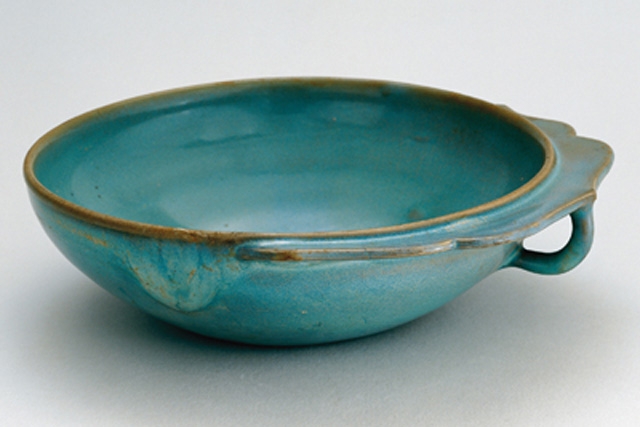
This exhibition reveals the broad range of aesthetics that appealed to Chinese imperial patrons of Chinese ceramics during a period that spans more than six hundred years, from the Song (960–1279) through the Qing dynasty (1644–1911). Selected works have been grouped to show how color and form in imperial ceramics can provide clues to their function. A final section explores some of the meanings represented by the decorative motifs found on imperial ceramics.
Imperial sponsorship for the arts, interest in collecting, and antiquarianism reached new levels during the Song period. Song-dynasty emperors had ceramics specially made for imperial use, and diverse kilns presented examples of their best works as tribute to the Northern Song (960–1126) and Southern Song (1127–1279) courts. The Song emperors appreciated works characterized by refined elegance and decoration and sensuous glazes. However, by the beginning of the Ming dynasty (1368–1644), when an imperial porcelain factory was first established at Jingdezhen in Jiangxi Province, an imperial appreciation for porcelains with bold decoration had already taken hold. Imperial interest in collecting both archaic and inventive new ceramics reached its apogee during the Qing dynasty. An unprecedented flowering of decorative developments, including the production of an extraordinary range of new colors and patterns, characterize imperial ceramics from the Qing dynasty.